

Oak Island is a small wooded island in Mahone Bay, on the south coast of Nova Scotia, Canada. For more than two hundred years people have been digging holes in it, convinced that a fabulous treasure lies at the bottom of a booby-trapped shaft called the Money Pit. Fortunes have been spent and six people have died. A long-running TV series has made it famous worldwide. No treasure has ever been found. This article looks at what is actually documented, the theories, and what geology suggests.
Key facts
- Where: Oak Island, Mahone Bay, Nova Scotia; about 57 hectares (140 acres).
- The legend: in 1795 three young men found a filled-in shaft with wooden platforms every 10 feet.
- Earliest written accounts: from the 1850s and 1860s, more than fifty years after the events they describe.
- Deaths: six people have died in searches, four of them in a single accident in 1965.
- Famous searcher: a young Franklin D. Roosevelt, later US president, joined a 1909 treasure hunt.
- Treasure found: none confirmed.
The story as it is usually told
According to the legend, in 1795 a teenager named Daniel McGinnis noticed a round dip in the ground under an oak tree, with an old ship’s block hanging from a branch above it. With two friends, John Smith and Anthony Vaughan, he started digging. They found a layer of flagstones a few feet down, then log platforms at around every 10 feet, before giving up.
In the early 1800s the Onslow Company, organised by Simeon Lynds, dug deeper. By most accounts they found more log platforms and layers of charcoal, putty and coconut fibre. At about 90 feet they reportedly found a stone carved with strange symbols. The next morning the shaft was full of seawater and could not be emptied. Later diggers claimed the water came through deliberately built flood tunnels connected to the beach at Smith’s Cove, designed to protect the treasure.
What is actually documented
The problem is that almost none of this was written down at the time. The first known published accounts appeared in Nova Scotia newspapers in the 1860s, based on memories passed down for decades, and they disagree with each other on dates, depths and finds.
- The “90-foot stone” was reportedly used as a fireplace stone and later went missing. No reliable copy of its inscription exists. The famous “translation”, “forty feet below two million pounds are buried”, first appeared much later.
- The coconut fibre is real in the sense that fibre has been found. But coconut fibre was commonly used as packing material on ships, and Nova Scotia had plenty of shipping.
- The original pit’s location is now lost. So many shafts, tunnels and boreholes have been dug that the east end of the island has been turned over many times. Later searchers often found the timbers and tools of earlier searchers.
Two centuries of searching
- 1849–1850s: the Truro Company drilled into the pit and claimed to have brought up bits of metal chain, and found what they took to be the flood tunnel’s drains at Smith’s Cove.
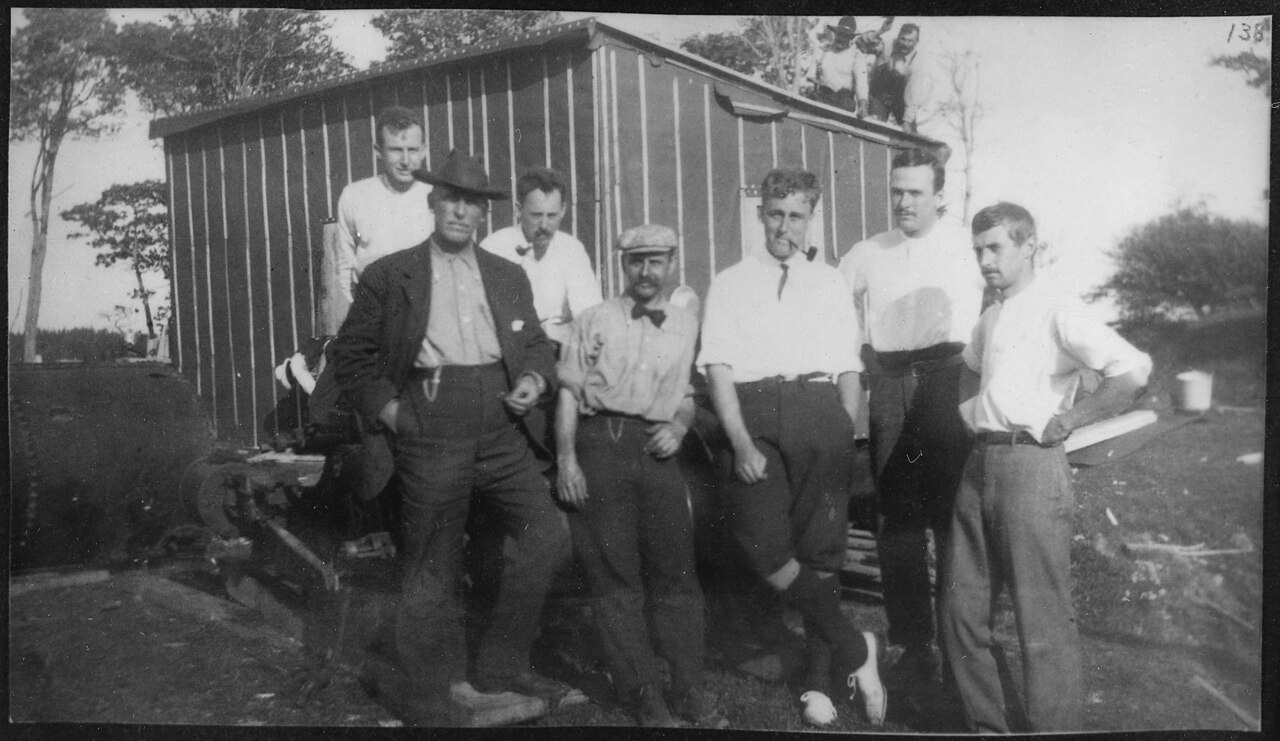
- 1909: the Old Gold Salvage and Wrecking Company, with Franklin D. Roosevelt as one of its investors and diggers, drilled again without result.
- 1965: Robert Restall, his son and two other men died in a shaft, overcome by gas, the worst accident in the island’s history.
- 1960s–2000s: Dan Blankenship and Triton Alliance sank Borehole 10-X, more than 200 feet deep. In 1971 Blankenship said an underwater camera showed a severed hand and chests, but the images were too unclear to convince others.
- 2014 onwards: the brothers Rick and Marty Lagina have funded a large modern search, filmed for the History channel series The Curse of Oak Island. They have found old coins, pieces of metal and wood from various centuries and other artefacts, but no treasure hoard.
The theories
Over the years the treasure has been said to be:
- Pirate loot, often linked to Captain William Kidd or Blackbeard.
- A military pay chest, hidden by British or French forces in the 18th century.
- Templar treasure, even the Holy Grail or the Ark of the Covenant, brought across the Atlantic by Knights Templar.
- Lost manuscripts, including papers supposedly proving that Francis Bacon wrote Shakespeare’s plays.
- Marie Antoinette’s jewels, smuggled out of France during the Revolution.
None of these has any direct evidence. Most are explanations in search of a treasure, built to fit the idea that something must be down there.
What geology suggests
Geologists and sceptics have offered a more ordinary explanation. Oak Island sits on glacial deposits over limestone and anhydrite, soft rocks that seawater dissolves into caves and sinkholes. A natural sinkhole would form a round dip in the ground, could hold fallen logs that look like platforms, and would fill with seawater through natural channels, just like the “flood tunnels”. Researchers such as the writer Joe Nickell have argued that the Money Pit was most likely a sinkhole, and that the legend grew around it as each generation of searchers reinterpreted the work of the last.
Our take
There is no good evidence that anyone ever buried a treasure on Oak Island. The famous details come from accounts written down generations after the events, and the flooding is easily explained by the island’s geology. What Oak Island really is, is the world’s longest treasure hunt: a story of hope, money and determination that has cost lives and fortunes. That story, not the gold, is the real treasure, and it is a remarkable one.
More to explore
For another lost treasure that really did exist, read about the Amber Room, or browse our list of unsolved mysteries.
Sources and further reading
- O’Connor, D. (1988). The Money Pit: The Story of Oak Island and the World’s Greatest Treasure Hunt.
- Nickell, J. (2000). “The Secrets of Oak Island.” Skeptical Inquirer.
- Sullivan, R. (2018). The Curse of Oak Island: The Story of the World’s Longest Treasure Hunt. Atlantic Monthly Press.