

A diamond that destroys its owners. A chair that kills anyone who sits in it. A painting that survives house fires. Stories of cursed objects are some of the most enduring legends there are, and some of these objects are on public display today.
But where did these curses actually come from? In this article we look at seven famous “cursed” objects, separate the documented history from the legend, and show how, in almost every case, the curse was added to the story later.
At a glance
- The Hope Diamond: a curse invented, at least partly, to sell it.
- Tutankhamun’s tomb: a newspaper sensation that statistics don’t support.
- Busby’s Stoop Chair: a “deadly” chair that may not be as old as its story.
- Robert the Doll: Key West’s most famous resident.
- Annabelle: the doll made famous by the Warrens and Hollywood.
- The Crying Boy: the painting a tabloid said couldn’t burn.
- The Dybbuk Box: an internet legend its creator later admitted inventing.
1. The Hope Diamond
The Hope Diamond is a deep blue diamond of 45.52 carats, now one of the most visited objects at the Smithsonian’s National Museum of Natural History in Washington, D.C.
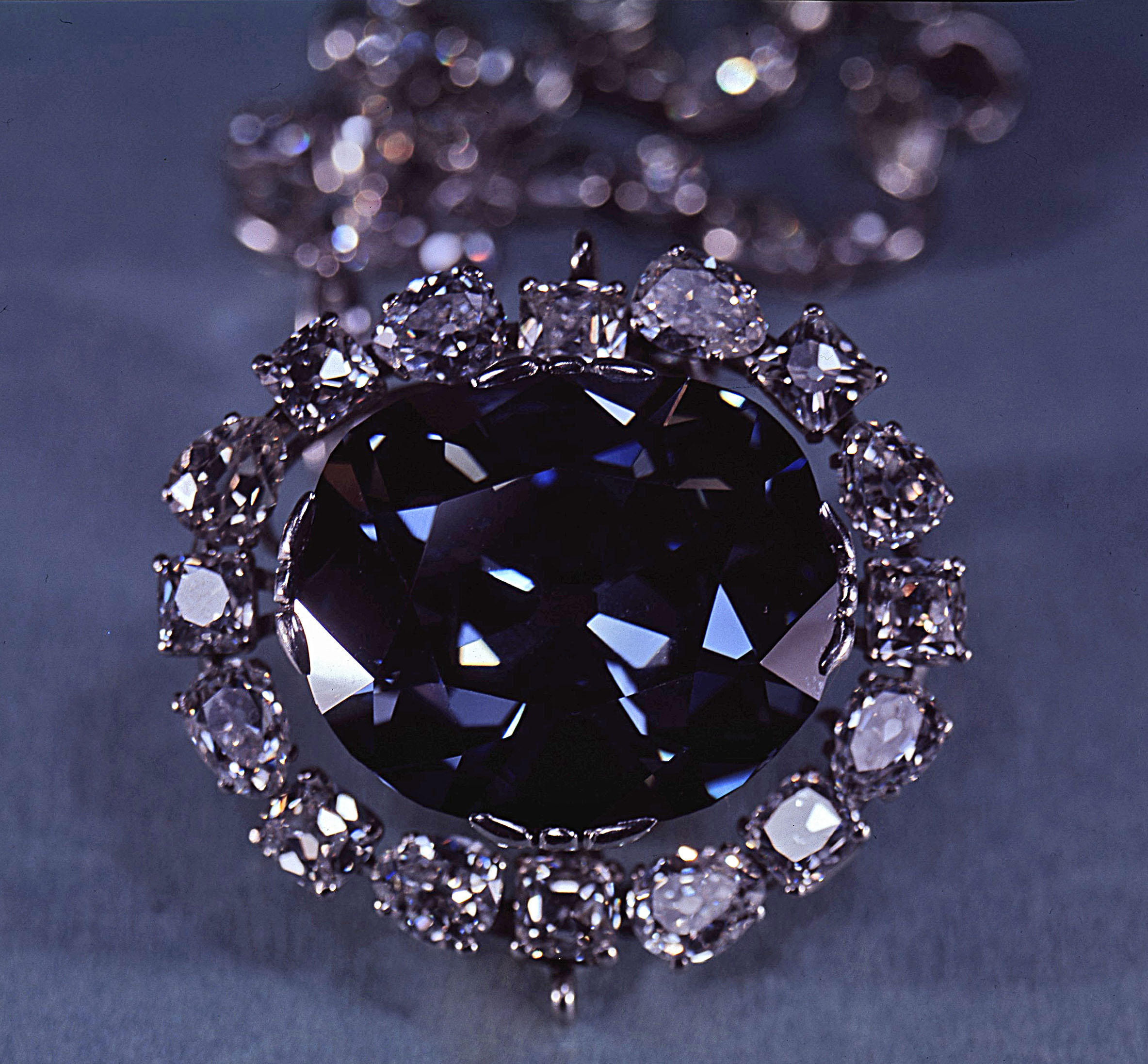
The real history: the stone it was cut from was bought in India by the French gem merchant Jean-Baptiste Tavernier, who sold it to King Louis XIV in 1668. It became part of the French crown jewels as the “French Blue”, was stolen during the French Revolution in 1792, and reappeared, recut, in London decades later. It took its name from the Hope family, who owned it in the 19th century.
The curse: stories that the gem was stolen from the eye of a Hindu idol, and that Tavernier was torn apart by wild dogs, appeared only in the early 1900s. Tavernier in fact died in his eighties. The jeweller Pierre Cartier is widely believed to have played up the curse when selling the diamond to the American heiress Evalyn Walsh McLean in 1911, since a dramatic history made it more desirable. McLean’s family did later suffer real tragedies, which kept the legend alive. The jeweller Harry Winston donated the diamond to the Smithsonian in 1958, famously sending it by ordinary registered mail.
2. The curse of Tutankhamun’s tomb
In November 1922, the archaeologist Howard Carter and his sponsor Lord Carnarvon opened the almost intact tomb of the Egyptian pharaoh Tutankhamun. Less than five months later, in April 1923, Carnarvon died in Cairo from an infection that started with an infected mosquito bite.
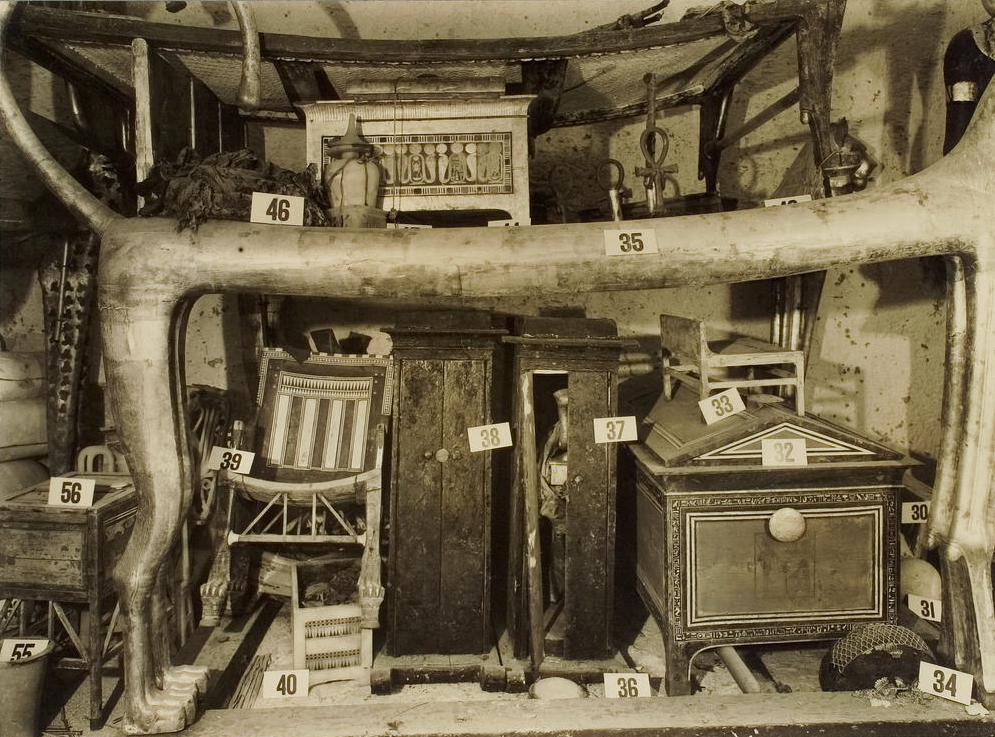
Newspapers, some of which were annoyed that a rival paper had exclusive access to the excavation, ran stories of an ancient curse on anyone who disturbed the pharaoh. Every death of anyone loosely connected to the tomb was added to the list.
The reality: Howard Carter, the man most responsible for opening the tomb, lived until 1939. In 2002, the epidemiologist Mark Nelson published a study in the British Medical Journal comparing the lifespans of Westerners who were present at key moments of the excavation with those who weren’t. He found no meaningful difference. Some have suggested that mould or bacteria in sealed tombs could be dangerous, but there’s no evidence this harmed anyone at Tutankhamun’s tomb.
3. Busby’s Stoop Chair
According to legend, in 1702 a man named Thomas Busby was hanged in North Yorkshire, England, for murdering his father-in-law. Before his execution, he supposedly cursed his favourite chair at a local inn, so that anyone who sat in it would die. Over the following centuries, the inn’s customers who sat in it were said to have died in accidents.
In 1978, the landlord gave the chair to the Thirsk Museum, which hung it high on a wall so that no one could ever sit in it again. It’s still there.
The reality: records of the deaths are mostly local stories rather than documents. And a furniture historian who examined the chair concluded that it was made in the 1800s, long after Busby’s death, which would make the original curse impossible.
4. Robert the Doll
Robert is a straw-stuffed doll in a sailor suit that belonged to Robert Eugene Otto, a painter who grew up in Key West, Florida, in the early 1900s. Family stories said the young Otto blamed the doll for mischief around the house, and later residents of the house claimed to hear it moving.
Robert is now displayed at the Fort East Martello Museum in Key West. Visitors are told to ask his permission before taking a photograph, and the museum receives letters from people apologising to the doll and blaming him for their bad luck afterwards.
The reality: there’s no documented evidence of anything supernatural. Robert is a good example of how a local story, a slightly unsettling face and a strong museum tradition can keep a legend alive. He is said to have inspired the idea of the killer doll Chucky.
5. Annabelle
The real Annabelle isn’t the porcelain doll from the films, but a cloth Raggedy Ann doll. According to the paranormal investigators Ed and Lorraine Warren, in 1970 it was given to a nursing student who reported that it moved around her apartment and left messages. The Warrens declared it possessed by a demonic presence and kept it in a glass case in their occult museum in Connecticut.
The reality: the only sources for the story are the Warrens’ own accounts, which have been widely criticised. The doll’s fame comes mainly from the Conjuring horror films that began in 2013.
6. The Crying Boy
In 1985, the British tabloid The Sun reported that firefighters kept finding a mass-produced print of a crying child undamaged in the ruins of burned-out houses. Within weeks, thousands of readers sent their copies to the paper, which burned them in a public bonfire.
The reality: the prints were cheap, widely sold reproductions of paintings by the Italian artist Giovanni Bragolin, so many houses had one. They were printed on hardboard treated with a fire-resistant varnish, and they often fell face down when the string holding them burned, which protected the image. A 2010 investigation for BBC radio tested the prints and found they were hard to burn.
7. The Dybbuk Box
In 2003, a man named Kevin Mannis put a wooden wine cabinet up for sale on eBay. The listing claimed it had belonged to a Holocaust survivor and contained a dybbuk, a malicious spirit from Jewish folklore, that had caused nightmares and strange events. The box was sold and resold, became a museum exhibit and inspired the 2012 horror film The Possession.
The reality: Mannis later admitted that he had invented the story as a piece of creative writing. It’s a clear modern example of how a cursed-object legend can be created from nothing.
Why cursed objects stick in our minds
Look at these stories together and the same ingredients keep appearing:
- A dramatic origin story that’s hard to check: an idol’s eye, a murderer’s last words, a Holocaust survivor’s secret.
- Selective counting. Every bad thing that happens to an owner is blamed on the object. Good luck and ordinary lives are ignored.
- Money. A curse makes an object more interesting, and therefore more valuable to sell, display or film.
- Retelling. Each new book, newspaper story or TV show adds details, until the legend is far bigger than the facts.
Our take
None of these objects has ever been shown to cause harm. What they do show, very clearly, is how stories grow. A curse is the perfect kind of legend: impossible to disprove, easy to “confirm” with any misfortune, and great for business.
That doesn’t make them less fun to visit. The Hope Diamond is a genuinely remarkable gem with a real history of theft, revolution and recutting, which is a better story than any curse.
More to explore
Read about famous haunted places you can visit, true ghost stories from around the world, the legend of the Spear of Destiny, and the lost treasure of the Amber Room.
Sources and further reading
- Smithsonian National Museum of Natural History: The Hope Diamond (history and provenance).
- Patch, S. S. (1976). Blue Mystery: The Story of the Hope Diamond. Smithsonian Institution Press.
- Nelson, M. R. (2002). “The mummy’s curse: historical cohort study”. BMJ, 325(7378).
- Thirsk Museum, North Yorkshire: information on the Busby Stoop Chair.
- Fort East Martello Museum, Key West Art & Historical Society: Robert the Doll.