

Most missing-person cases are solved within days. A few are never solved at all. A person walks into the woods, a boat leaves harbour, a plane radios in, and then nothing, sometimes for decades.
This article covers eight of the strangest of those cases from the last 80 years. They are less famous than Amelia Earhart or the Mary Celeste, but in many ways more puzzling, because modern searches, forensic science and police work still could not explain them. For each one we set out what is actually known, what is only rumour, and the explanations that make the most sense.
These are real people, and many of their families are still waiting for answers. We have tried to stick to the documented facts.
At a glance
- The Sodder children (West Virginia, 1945): five children missing after a house fire.
- The Bennington Triangle (Vermont, 1945–1950): five people vanished in one corner of the state.
- MV Joyita (South Pacific, 1955): a ship found drifting with all 25 people gone.
- Frederick Valentich (Australia, 1978): a pilot who reported a strange craft over the sea.
- The Sarah Joe (Hawaii, 1979): five fishermen lost, and a grave found nine years later.
- Ray Gricar (Pennsylvania, 2005): a district attorney whose laptop turned up in a river.
- Barbara Bolick (Montana, 2007): a hiker who vanished in under a minute.
- Lauren Spierer (Indiana, 2011): a student last seen walking home.
1. The Sodder children (1945)
In the early hours of Christmas Day 1945, a fire destroyed the home of George and Jennie Sodder in Fayetteville, West Virginia. George, Jennie and four of their children escaped. Five others, Maurice (14), Martha (12), Louis (10), Jennie (8) and Betty (5), were never seen again.
The authorities ruled the fire accidental, blamed faulty wiring, and issued death certificates within days. The parents never accepted this, and several details gave them reason to doubt:
- No remains were found in the ashes at the time.
- The family’s ladder was not by the house but about 75 feet away, and the phone line appeared to have been cut.
- Neither of George’s trucks would start that night.
- A dig at the site in 1949 found a few vertebrae. A Smithsonian specialist concluded they came from one person aged roughly 16 to 22, so probably not one of the missing children.
The Sodders believed the fire was set deliberately, possibly in revenge for George’s outspoken criticism of Mussolini, and that the children had been taken. For decades they kept a billboard by the roadside with the five children’s photos. In 1967 they received a photo of a young man they believed was an adult Louis. It was never confirmed.
What probably happened: many researchers think the children did die in the fire. A house fire that burns for a long time can destroy remains more completely than people expect, especially with the limited forensic methods of 1945. But the missing ladder, cut wire and the poor first investigation mean the case has never been closed.
2. The Bennington Triangle (1945–1950)
“Bennington Triangle” is a name coined by the Vermont author Joseph A. Citro for an area of southwestern Vermont around Glastenbury Mountain. In five years, five people went missing there:
- Middie Rivers, 74, an experienced hunting guide, vanished in November 1945 while leading a hunting party back to camp. Despite a large search, his body was never found.
- Paula Welden, 18, a college student, set out to hike the Long Trail on 1 December 1946 and was never seen again. Her case inspired Shirley Jackson’s novel Hangsaman.
- James Tedford, 68, a First World War veteran, was last seen boarding a bus in Burlington on 1 December 1949 and never got home. He wasn’t reported missing for a week.
- Paul Jepson, 8, disappeared from the Bennington town dump on 12 October 1950. A search dog followed his scent to a road, where it stopped.
- Frieda Langer, 53, went missing on a short walk near Somerset on 28 October 1950. Her body was found the following May in the Deerfield River.
Over the years, the area has gathered stories of strange lights, hostile spirits and “dematerialisation”. None of these has any evidence behind it.
What probably happened: the “triangle” has no fixed boundary, and the five cases are not linked by anything except place and time. The region is steep, heavily wooded and easy to get lost in, and several cases involved poor weather or delays in reporting. Unconnected accidents are the most likely explanation, though that doesn’t make any single case less sad or less strange.
3. MV Joyita, the empty ship (1955)
On 3 October 1955, the 21-metre motor vessel Joyita left Apia, Samoa, for the Tokelau Islands, a trip of about two days. It carried 25 people: 16 crew and 9 passengers. It never arrived.
Five weeks later, on 10 November, the Joyita was found drifting north of Vanua Levu, Fiji, more than 600 miles off its route. It was half-flooded and listing heavily, but it was still afloat, because its hold was lined with cork. Everyone on board was gone, along with the life rafts.
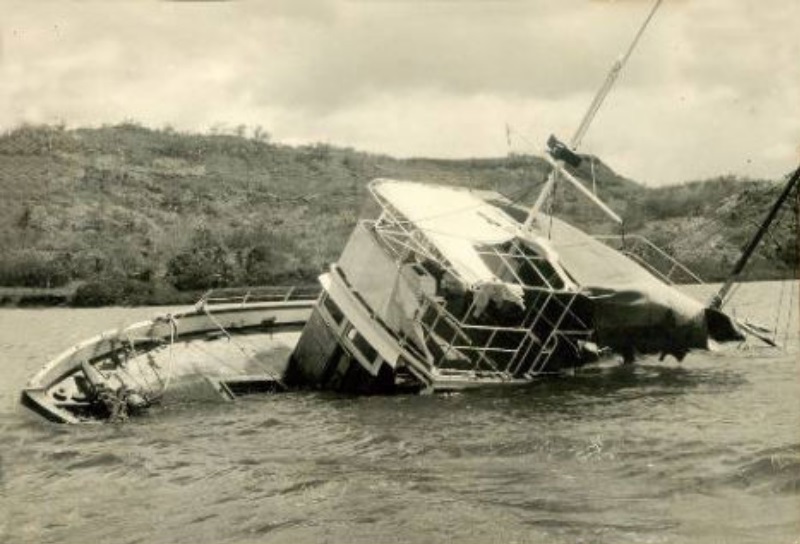
Investigators found:
- A corroded cooling pipe had let water into the engine room, and the bilge pumps were blocked.
- A fault in the radio cable meant any distress call would have carried only about two miles.
- The electric clocks had stopped at 10:25, suggesting the power failed at night.
- A doctor’s bag on board contained bloodstained bandages.
An official inquiry in 1956 found the fate of the people aboard “inexplicable on the evidence”. Theories have included piracy, mutiny, insurance fraud and an injured captain, but none has been proved.
What probably happened: the most widely accepted idea is that the ship began flooding, the captain (who may have been injured) could not keep control, and those on board took to the life rafts, not realising the Joyita was almost unsinkable. In open ocean, small rafts can drift for weeks and leave no trace. It is a story with a similar shape to the Mary Celeste.
4. Frederick Valentich (1978)
On the evening of 21 October 1978, 20-year-old pilot Frederick Valentich took off from Moorabbin, near Melbourne, in a small Cessna 182 to fly across Bass Strait to King Island.
Shortly after 7 pm he radioed air traffic control to report an unidentified aircraft with four bright lights flying close to him. Over the next few minutes he described it moving around him, said his engine was running roughly, and finally said, “It’s not an aircraft.” The last transmission was 17 seconds of what controllers described as metallic, scraping sounds. Then contact was lost.
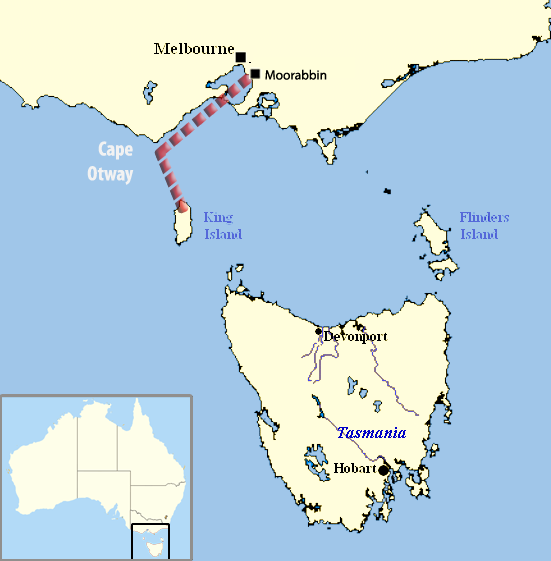
A search covering over 1,000 square miles found nothing. Five years later, a piece of engine cowling believed to come from the plane washed up on Flinders Island. The official report concluded only that the cause was unknown and the disappearance “presumed fatal”.
What probably happened: because of the radio recording, this case is famous among UFO enthusiasts. Most aviation researchers favour a more ordinary explanation. Valentich was relatively inexperienced, flying at dusk over dark water, where pilots can lose track of which way is up. One analysis suggests he was in a slow, descending spiral and mistook bright planets and stars, or his own reflected lights, for another craft. A staged disappearance has also been suggested. No theory explains every detail.
5. The Sarah Joe (1979)
On 11 February 1979, five men set out from Hāna, Maui, in the Sarah Joe, a 17-foot Boston Whaler, for a day’s fishing: Benjamin Kalama, Scott Moorman, Patrick Woessner, Peter Hanchett and Ralph Malaiakini. A sudden storm blew in that afternoon, and they never returned. A huge air and sea search found nothing.
Nine years later, in 1988, a marine biologist named John Naughton was surveying the remote, uninhabited Taongi Atoll in the Marshall Islands, more than 2,000 miles from Hawaii. He found the wreck of a small boat. Its registration and engine numbers matched the Sarah Joe.
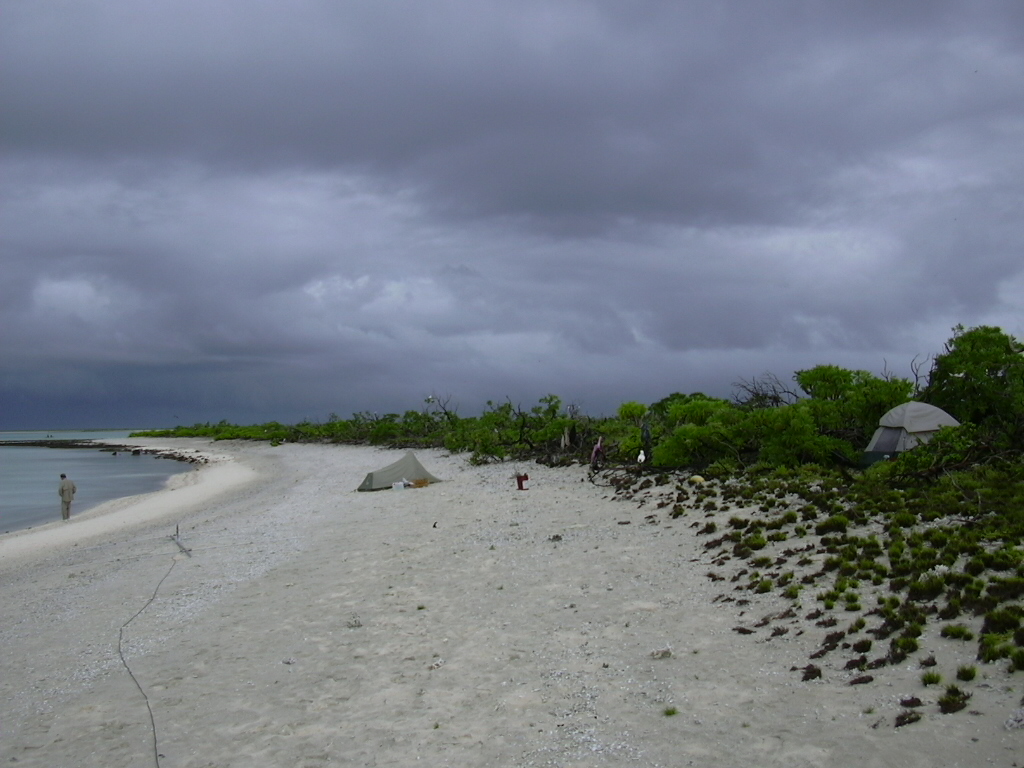
Nearby was a shallow grave marked with a driftwood cross. The bones inside were identified from dental records as Scott Moorman’s. No trace of the other four men has ever been found.
The mystery: ocean currents can carry a drifting boat that far, so how the Sarah Joe reached Taongi is not really the puzzle. The puzzle is the grave. Moorman can’t have buried himself, and none of the others were found on the island. One suggestion is that passing fishermen found his body and buried it, but nobody has ever come forward, and the burial has never been explained.
6. Ray Gricar (2005)
Ray Gricar had been the district attorney of Centre County, Pennsylvania, for 20 years and was about to retire. On 15 April 2005 he took a day off and phoned his partner around 11:30 am to say he was driving through Brush Valley. He never came home.
The next day his red Mini Cooper was found in the car park of an antique market in Lewisburg, well outside his home county. His work phone was inside, but his laptop, keys and wallet were not.
- In July 2005, his laptop was pulled from the Susquehanna River. Its hard drive was missing.
- The hard drive was found nearby two months later, so badly damaged that the FBI and data-recovery experts could not read anything from it.
- Police later revealed that someone had searched online for how to wreck a hard drive on his home computer.
Gricar was declared legally dead in 2011.
What probably happened: police have long leaned towards suicide in or near the river (his brother had died in a river years earlier). His family disagrees. Others think he planned a new life somewhere else, or that his work as a prosecutor made him enemies. The destroyed hard drive suggests he planned at least part of what happened, but there’s no clear evidence beyond that.
7. Barbara Bolick (2007)
On 18 July 2007, Barbara Bolick was hiking with a friend near Bear Creek Overlook in Montana’s Bitterroot Mountains, near the town of Victor. Her friend says he stopped to look at the view, and when he turned around, she was gone.
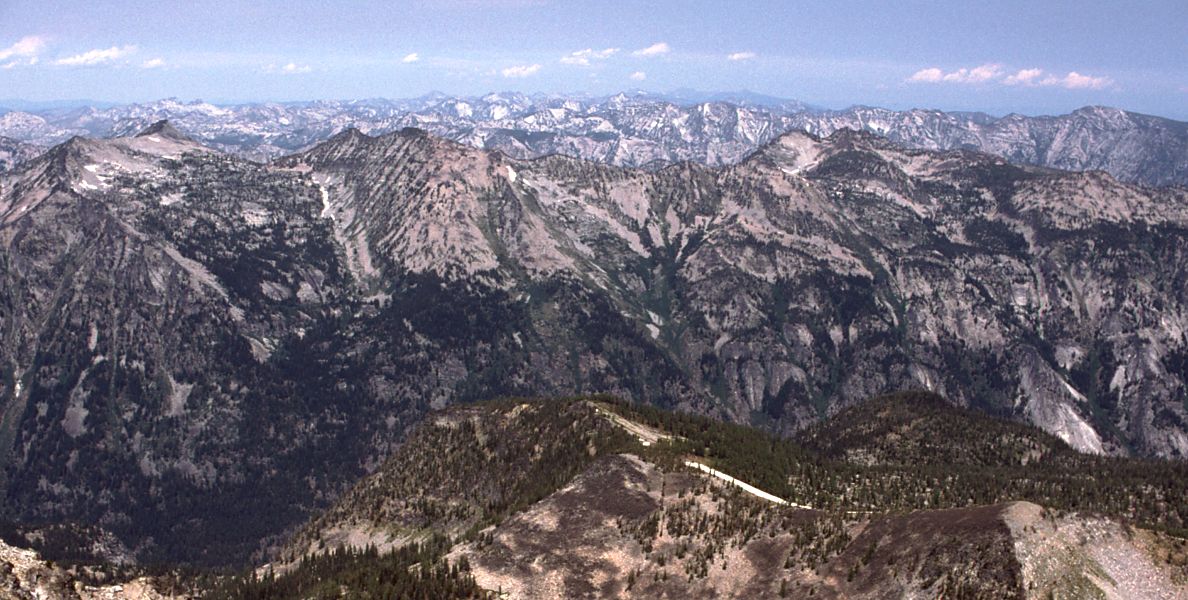
A large ground search with tracking dogs found no sign of her at all: no clothing, no backpack, no scent trail. Investigators have said that every possibility remains open, including an accident, foul play and a deliberate disappearance.
What probably happened: nobody knows. Mountain terrain can hide a fall surprisingly well, but searchers would normally expect to find something. Cases like this one are common in online “vanished in the woods” stories, which often add supernatural explanations. The more ordinary truth is that wilderness searches miss things far more often than people realise.
8. Lauren Spierer (2011)
Lauren Spierer, 20, was a student at Indiana University in Bloomington. In the early hours of 3 June 2011, after a night out, she left Kilroy’s Sports Bar at about 2:30 am. Over the next two hours she was seen with friends and acquaintances in and around a nearby apartment building. She was last seen at about 4:30 am, walking near 11th Street and College Avenue, barefoot. Her phone and shoes had been left behind earlier that night.
The investigation has been huge. Police searched a landfill for nine days, received more than 3,000 tips, and in 2016 the FBI searched a property outside the city, without result. Several young men who were with her that night were questioned and later sued by her family; none has been charged, and the lawsuits were dismissed.
What probably happened: her family believes someone she knew knows what happened. Police have considered an accidental overdose or medical emergency followed by a cover-up, as well as abduction by a stranger. More than a decade later, no one has been charged and she has not been found.
Why some disappearances are never solved
Looking at these cases side by side, a few patterns stand out. None of them requires anything supernatural:
- The ocean and the wilderness hide things. Four of the eight cases involve open sea or rough mountain terrain. Bodies, boats and planes can vanish there completely.
- Delays matter. In several cases, days passed before anyone raised the alarm. The first 48 hours of a search are the most valuable, and they were lost.
- Early mistakes can’t be undone. The rushed investigation of the Sodder fire, for example, meant evidence was never properly collected.
- Some people want to disappear. It’s rare, but it happens, and a person who plans it can be very hard to find.
That doesn’t make these cases less unsettling. If anything, the fact that ordinary explanations still can’t be proved is what keeps them unsolved.
More vanishings to explore
For older and more famous cases, read our guide to famous historical disappearances, including the writer Ambrose Bierce. We also have in-depth articles on the lost colony of Roanoke, Amelia Earhart, Flight MH370, the Bermuda Triangle and the Dyatlov Pass incident.
Sources and further reading
- Wikipedia: Sodder children disappearance, Bennington Triangle, MV Joyita, Disappearance of Frederick Valentich, Disappearance of the Sarah Joe, Ray Gricar, Disappearance of Lauren Spierer. Each article cites the original news reports and official findings.
- NBC Montana: Missing Bitterroot woman still a mystery (Barbara Bolick case).
- Maugham, R. (1962). The Joyita Mystery.
If you have information about any open missing-person case, contact the police force handling it.