

Some stories sound too odd to be true: a wave of molasses that killed 21 people, a pope who put a corpse on trial, a chicken that lived for 18 months without its head. Each of the 15 stories below really happened. We’ve stuck to events backed by contemporary records, court cases or scientific papers, and where a famous detail is doubtful, we say so.
How we chose these stories
The internet is full of “true” stories that turn out to be legends. To make this list, an event needed solid evidence: newspaper reports from the time, official inquiries, medical records or peer-reviewed research. Several popular tales didn’t make it. The “Man from Taured”, for example, is a great story, but there’s no record that it ever happened (we explain why in our article on the Taured mystery).
1. The Boston Molasses Flood (1919)
On 15 January 1919, a huge storage tank in Boston’s North End burst open. It held about 2.3 million US gallons (8.7 million litres) of molasses waiting to be turned into industrial alcohol. A wave of syrup, estimated at up to 7.5 metres (25 feet) high, swept through the streets at around 55 km/h (35 mph). It flattened buildings, knocked a train off the elevated railway and trapped people and horses.
Twenty-one people died and about 150 were injured. A long court case found that the tank had been badly built and never properly tested; it had leaked so much that the company painted it brown to hide the drips. In 2016, researchers at Harvard showed that the cold January air made the molasses thicken quickly, which is why rescuers struggled to free victims.
2. The London Beer Flood (1814)
A century earlier, London had its own sticky disaster. On 17 October 1814, a giant vat of porter at the Meux and Company Horse Shoe Brewery, near today’s Tottenham Court Road, burst. It smashed other vats, and somewhere between about 128,000 and 323,000 imperial gallons of beer poured into the crowded slum of St Giles. Eight people died, most of them women and children at a wake and in their homes. The inquest called it an “act of God”, and the brewery even reclaimed the tax it had paid on the lost beer.
3. The Tanganyika laughter epidemic (1962)
On 30 January 1962, three girls at a mission boarding school in Kashasha, in what is now Tanzania, started laughing and couldn’t stop. The laughter, often mixed with crying and fainting, spread to other pupils. The school closed in March. The outbreak then moved to nearby villages and schools. By the time it died down, about 14 schools had closed and roughly 1,000 people had been affected.
Researchers describe it as mass psychogenic illness, sometimes called mass hysteria: real physical symptoms that spread through a group under stress, without an infection or poison. It happened just after Tanganyika’s independence, at a time of big social change and strict school routines.
4. The Dancing Plague of 1518
A similar thing happened four centuries earlier. In July 1518, a woman in Strasbourg began dancing in the street, and within weeks dozens, possibly hundreds, of people had joined her. City records show the authorities even hired musicians, believing the dancers needed to “dance it out”. The most widely accepted explanation is again mass psychogenic illness, in a city suffering from famine and disease. Read the full story in our article on the Dancing Plague of 1518.
5. The soldier who kept fighting until 1974
Hiroo Onoda was a Japanese army intelligence officer sent to Lubang Island in the Philippines in December 1944. His orders were never to surrender. When the war ended, leaflets announcing Japan’s defeat reached the island, but Onoda believed they were enemy tricks. He stayed hidden in the jungle for 29 years.
His story is often told as one of loyalty, but it had a dark side: Onoda and his companions killed a number of Filipino islanders during those years. He only surrendered in March 1974, after his former commanding officer, Major Yoshimi Taniguchi, travelled to Lubang and formally ordered him to stand down. The Philippine president, Ferdinand Marcos, pardoned him.

6. Phineas Gage and the iron rod (1848)
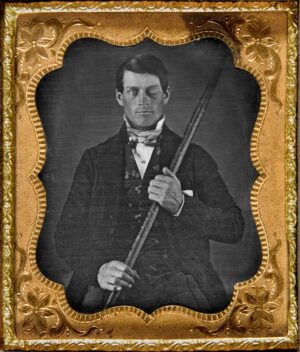
On 13 September 1848, Phineas Gage, a railway construction foreman in Cavendish, Vermont, was packing explosive powder into a hole with an iron rod. The powder exploded and drove the rod, over a metre long and about 6 kilograms in weight, up through his left cheek and out of the top of his skull. Gage was conscious within minutes and talking to the doctor who treated him.
He survived for nearly 12 more years. His doctor, John Harlow, reported that his personality changed after the accident, and Gage became one of the most famous cases in neuroscience, cited for linking the brain’s frontal lobes to behaviour. Historians now think the change may have been exaggerated in later retellings, and that Gage recovered more than once believed. His skull and the rod are on display at Harvard’s Warren Anatomical Museum.
7. Violet Jessop, who survived three ship disasters
Violet Jessop worked as a stewardess for the White Star Line. She was on board RMS Olympic in 1911 when it collided with the warship HMS Hawke. The following year she was on the Olympic’s sister ship, the Titanic, and escaped in a lifeboat. In 1916, working as a nurse during the First World War, she was aboard the third sister ship, HMHS Britannic, when it hit a mine and sank in the Aegean Sea. She survived again, and kept working at sea for years afterwards.

8. The man who survived both atomic bombs
Tsutomu Yamaguchi, an engineer from Nagasaki, was in Hiroshima on a business trip on 6 August 1945 when the first atomic bomb exploded about 3 kilometres away. He was badly burned, but he travelled home to Nagasaki. On 9 August, he was describing the Hiroshima blast to his boss when the second bomb exploded over Nagasaki. He survived that too. In 2009, the Japanese government officially recognised him as a survivor of both bombings. He died in 2010, aged 93, and spent his later years campaigning against nuclear weapons.
9. Juliane Koepcke, who fell 3 kilometres and lived
On 24 December 1971, LANSA Flight 508 was struck by lightning over the Peruvian Amazon and broke apart in mid-air. Seventeen-year-old Juliane Koepcke fell about 3 kilometres, still strapped into her row of seats, into the rainforest. She woke with a broken collarbone and cuts, alone. Her parents were biologists, and she remembered her father’s advice to follow water downstream. After about 11 days of walking and wading, she was found by local loggers. She was the only one of 92 people on board to survive. She later became a biologist herself.
10. The theft of Einstein’s brain (1955)
When Albert Einstein died in Princeton on 18 April 1955, the pathologist who carried out the autopsy, Thomas Harvey, removed the brain and kept it. He hadn’t asked the family first, though he later got permission from Einstein’s son on the condition that it be used for science. Harvey had the brain cut into about 240 pieces. He kept many of them for decades, including in jars at his home, and sent samples to researchers. In the late 1990s, he handed the remaining pieces to the pathology department at Princeton Hospital. Studies of the samples have claimed some unusual features, but scientists warn that one brain can’t tell us much about genius.
11. Mike the Headless Chicken (1945)
In September 1945, Lloyd Olsen, a farmer in Fruita, Colorado, tried to kill a chicken for dinner. His axe removed most of the head but missed the jugular vein and left most of the brainstem intact, which controls basic functions such as breathing. The chicken kept walking around. Olsen fed it with an eye dropper, and “Mike” lived for about 18 months, touring sideshows and appearing in Life magazine. He died in 1947 after choking in a motel room. Fruita still holds a Mike the Headless Chicken festival.
12. The Kentucky meat shower (1876)
On 3 March 1876, flakes of what looked like fresh meat fell from a clear sky onto a farm in Bath County, Kentucky, for several minutes. The story was reported in newspapers including the New York Times. Samples were sent to scientists, and some were identified as lung tissue and muscle. The most widely accepted explanation came from a local doctor, L. D. Kastenbine: a flock of vultures, which often vomit to lighten themselves when they take off quickly, had thrown up their last meal overhead.
13. The pope who put a corpse on trial (897)
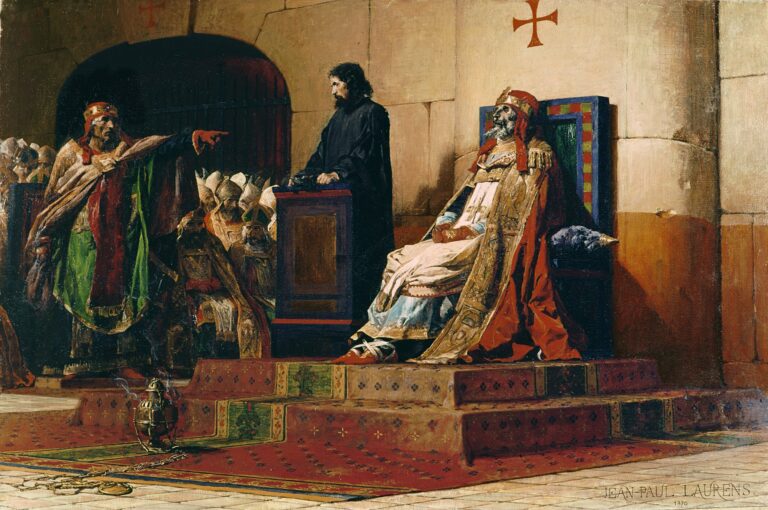
In January 897, Pope Stephen VI had the body of his predecessor, Pope Formosus, dug up. The rotting corpse was dressed in papal robes, propped on a throne and put on trial for breaking church law. A deacon answered on the dead man’s behalf. Formosus was found guilty, the fingers he had used to give blessings were cut off, and the body was thrown into the River Tiber. This “Cadaver Synod” caused outrage in Rome. Within months, Stephen himself was overthrown, imprisoned and strangled.
14. The CIA’s “Acoustic Kitty”
In the 1960s, the CIA experimented with turning a cat into a listening device, fitting it with a microphone and transmitter so it could wander close to people and record their conversations. A heavily redacted 1967 CIA memo titled “Views on Trained Cats”, made public by the National Security Archive in 2001, confirms the project and concludes that the idea wasn’t practical. A famous detail, that the first cat was run over by a taxi on its first mission, comes from a former CIA official’s later account and has been disputed, so treat that part with caution.
15. The Great Emu War (1932)
In 1932, farmers in Western Australia asked the army for help against around 20,000 emus that were destroying their wheat. The army sent three soldiers with two machine guns. After weeks of chasing scattered birds, the operation was called off as an embarrassment. It wasn’t really a “war”, but it really happened. Read the full story in our article on the Great Emu War.
Why true stories can feel so unbelievable
Many of these events have something in common: ordinary things behaving in unexpected ways. Molasses and beer don’t seem dangerous until there are millions of litres of them. Most people would die from a rod through the skull or a fall from a plane, so the rare survivors stand out. And we tend to underestimate how strange large groups of people can be under stress, which explains outbreaks like the laughter epidemic and the Dancing Plague.
It works the other way too. Because true stories can be so odd, invented ones can feel just as believable. That’s why it’s worth checking where a story comes from before sharing it.
More to explore
If you enjoyed these, try the story of the Lykov family, who lived alone in the Siberian wilderness for 40 years, or the era when European doctors prescribed human remains as medicine. For a strange crime, read about the 1911 theft of the Mona Lisa.
Sources and further reading
- Puleo, S. (2003). Dark Tide: The Great Boston Molasses Flood of 1919. Beacon Press.
- Kennedy, J. and Sharp, N. (2016). Research on the fluid dynamics of the Boston Molasses Flood, presented at the American Physical Society Division of Fluid Dynamics meeting; reported in Live Science.
- Historic UK: The London Beer Flood of 1814.
- Rankin, A. M. and Philip, P. J. (1963). “An epidemic of laughing in the Bukoba district of Tanganyika.” Central African Journal of Medicine.
- Waller, J. (2008). A Time to Dance, a Time to Die: The Extraordinary Story of the Dancing Plague of 1518. Icon Books.
- Onoda, H. (1974). No Surrender: My Thirty-Year War. Kodansha International.
- Macmillan, M. (2000). An Odd Kind of Fame: Stories of Phineas Gage. MIT Press.
- Jessop, V. (1997). Titanic Survivor: The Memoirs of Violet Jessop, edited by J. Maxtone-Graham. Sheridan House.
- NPR: Survivor of two atom bombings dies (2010).
- Koepcke, J. (2011). When I Fell From the Sky. Titletown Publishing.
- Abraham, C. (2001). Possessing Genius: The Bizarre Odyssey of Einstein’s Brain. St. Martin’s Press.
- National Security Archive: “Views on Trained Cats” and other CIA documents (released 2001).
- Britannica: Formosus and the Cadaver Synod.