

Millions of people have had a reading from a psychic, tarot reader or medium, and many come away amazed at how much the reader seemed to know. Some psychics have worked with police, and governments have spent millions testing whether “remote viewing” could help spy on enemies.
So are psychic powers real? People have been testing that question carefully since the 1800s. This article walks through the most important tests, what they found, and the well-understood techniques that can make a reading feel uncanny.
The short answer
- No psychic has ever shown their abilities under conditions that rule out ordinary explanations, in a way that others could repeat.
- Large government and university programmes found no reliable effect.
- Many famous mediums were caught cheating.
- Readings can still feel remarkably accurate because of techniques called cold reading, and because of how our memory works.
How it started: the Fox sisters (1848)
Modern Spiritualism began in 1848 in Hydesville, New York, when two young sisters, Margaretta and Kate Fox, claimed the strange rapping noises in their house were messages from the spirit of a murdered man. With their older sister Leah, they became famous mediums, and séances became a craze across America and Europe.
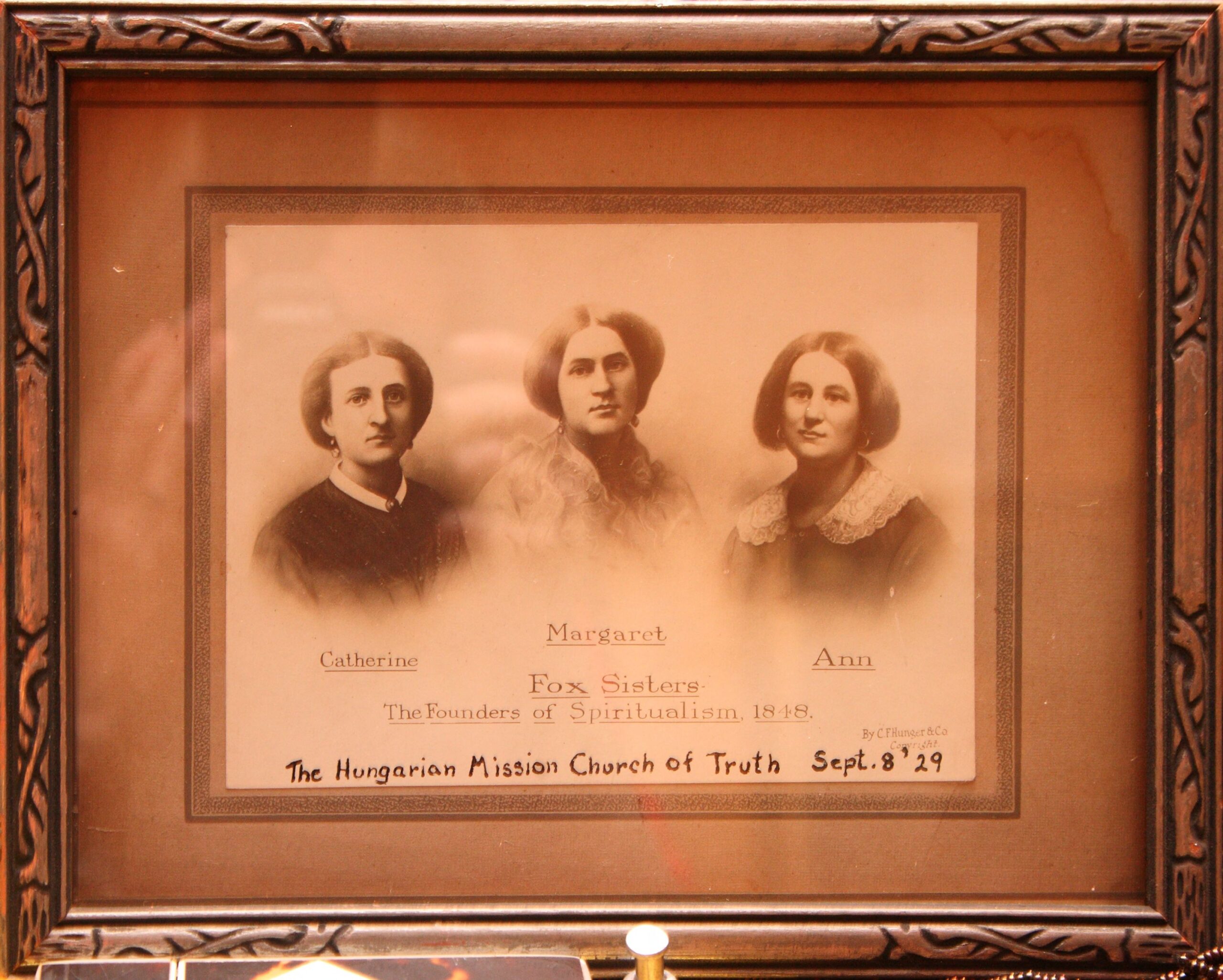
Forty years later, in 1888, Margaretta publicly confessed that the rappings had been a trick, made by cracking the joints of her toes, and demonstrated it on stage. She later took the confession back, but by then the method was out.
Houdini against the mediums (1920s)
The escape artist Harry Houdini knew more about stage trickery than almost anyone, and after his mother’s death he began attending séances. He was angered by what he saw: mediums using the same methods magicians used. He spent much of the 1920s exposing them, and sat on a Scientific American committee that offered a prize to any medium who could prove their powers. Nobody won.
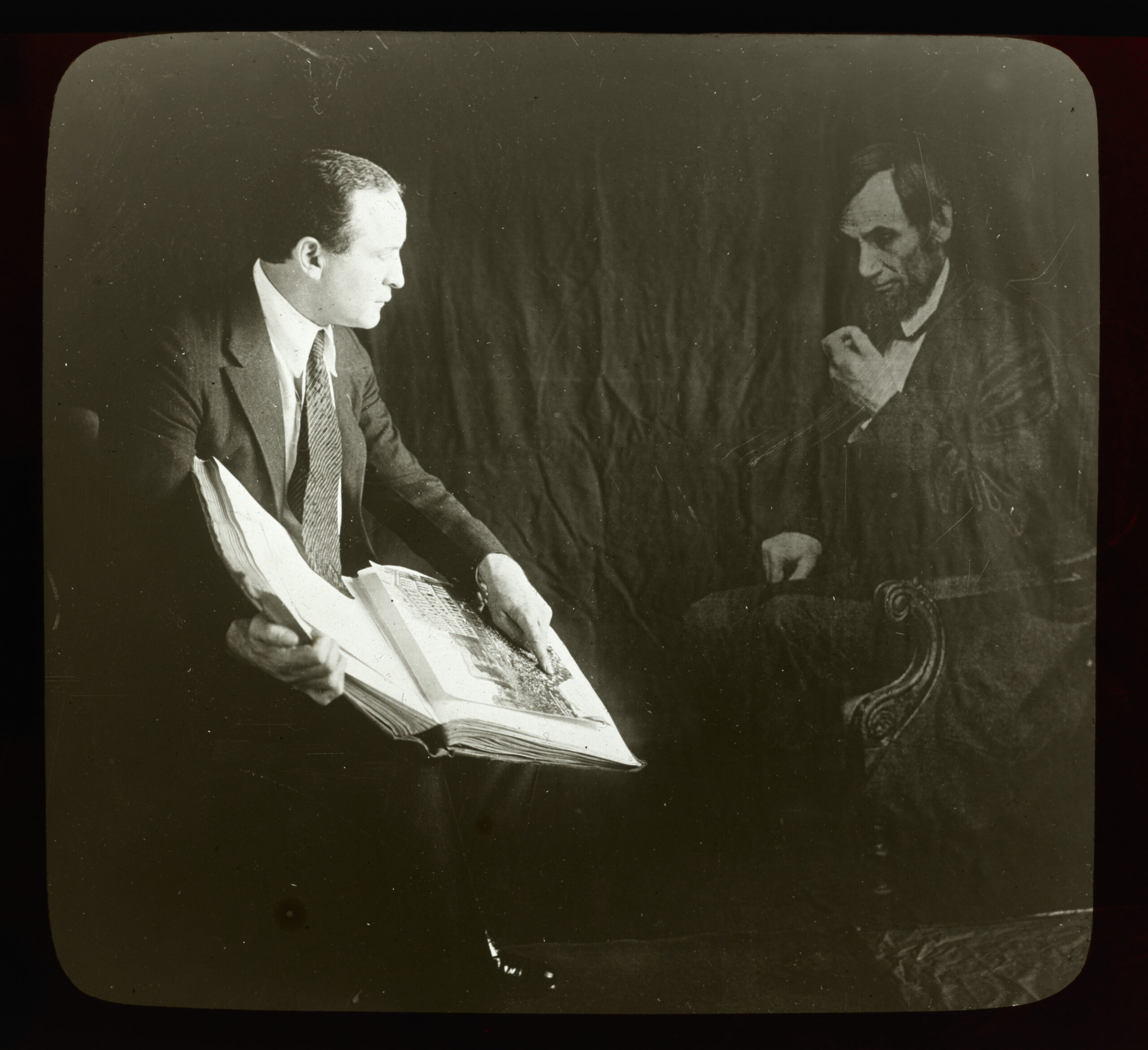
He also made trick photographs, like the one at the top of this article, to show how easily “spirit photographs” could be faked.
ESP in the lab: J. B. Rhine (1930s)
At Duke University in the 1930s, the botanist-turned-psychologist J. B. Rhine set out to study psychic abilities scientifically. He popularised the term extrasensory perception (ESP) and used a deck of cards with five simple symbols (circle, cross, wavy lines, square and star), now called Zener cards. Subjects tried to guess which card was being looked at.
Rhine reported scores above chance, and his work was taken seriously at first. But other labs struggled to repeat his results, and critics found weaknesses: cards could sometimes be seen through or their backs recognised, record-keeping was loose, and results tended to fade as controls got stricter.
The spy programme: remote viewing (1970s–1995)
During the Cold War, US intelligence agencies funded research into “remote viewing”, the idea that trained people could describe distant places or objects using only their minds. The work, eventually known as the Stargate Project, ran for over 20 years.
In 1995, the CIA commissioned an independent review by the American Institutes for Research. It concluded that remote viewing had never provided information that helped in an actual intelligence operation. The programme was shut down that year.
The million-dollar challenge (1964–2015)
The magician and investigator James Randi offered a prize, which grew to one million dollars, to anyone who could demonstrate a paranormal ability under agreed test conditions. Over about 50 years, more than a thousand people applied. Many dropped out before testing, and nobody passed even the preliminary test.
Randi also exposed the television faith healer Peter Popoff in 1986, by using a radio scanner to show that the “divine messages” Popoff received about audience members were really being fed to him through an earpiece by his wife.
Modern research: the Bem controversy (2011)
In 2011, the respected psychologist Daryl Bem published a series of experiments in a leading psychology journal that appeared to show people could sense future events. It caused a sensation. But attempts to repeat the experiments failed, and the episode became a famous example in the “replication crisis”: a wider realisation that common research methods could produce false positive results. Ironically, Bem’s paper ended up improving how psychology research is done.
How psychic readings work
If psychic powers aren’t real, why do readings so often feel accurate? Several well-studied techniques explain it, whether a reader uses them deliberately or without realising.
Cold reading
A skilled reader notices age, clothing, accent, wedding rings, body language and reactions, then makes statements that are likely to fit. They watch your face and quickly follow up on anything you respond to.
The Barnum effect
In 1948, the psychologist Bertram Forer gave his students what he said was a personal personality profile. In fact, everyone got the same vague text, taken partly from a horoscope book. On average, they rated it as very accurate. Statements like “you have a great deal of unused potential” or “at times you are sociable, at other times reserved” feel personal but fit almost everyone.
Shotgunning
The reader fires out lots of guesses quickly (“I’m getting a J… or a name with a J sound… a John, or James?”). People remember the hits and forget the misses.
Hot reading
Some performers research their audience in advance, through social media, conversations before the show, or information people give when booking.
Our own memories
After a reading, people tend to remember the details that seemed right and fill in vague statements with their own meaning. The reader often gets credit for things the client actually said.
What about psychic detectives?
Psychics are sometimes said to have helped solve crimes, especially on television. Police forces asked about this generally say psychic tips have not solved cases, and can waste time. In one painful example, the famous psychic Sylvia Browne told the mother of the missing Ohio teenager Amanda Berry on TV in 2004 that her daughter was dead. Amanda Berry was found alive in 2013; her mother had died years earlier, believing the prediction.
Is there any harm?
For many people, a tarot reading or horoscope is harmless fun, or a way to think through a problem. The risks come when people make major decisions based on readings, pay large sums for “curse removal” or repeated sessions, or are told false things about missing or dead loved ones. Grief in particular makes people vulnerable to mediums who claim to contact the dead.
Our take
After more than 175 years of testing, by scientists, magicians, governments and sceptics, there is no reliable evidence that anyone can read minds, see the future or talk to the dead. What there is, is a lot of evidence about how easily our minds can be convinced, even by honest readers who believe in their own gifts.
That doesn’t mean people who visit psychics are foolish. The techniques work on everyone, including scientists. Knowing how they work is the best protection.
More to explore
Read about famous prophecies that came true (or didn’t), true ghost stories from around the world, and why people believe conspiracy theories.
Sources and further reading
- Mumford, M. D., Rose, A. M. & Goslin, D. A. (1995). An Evaluation of Remote Viewing: Research and Applications. American Institutes for Research (the CIA-commissioned review).
- Forer, B. R. (1949). “The fallacy of personal validation: a classroom demonstration of gullibility”. Journal of Abnormal and Social Psychology, 44(1).
- Bem, D. J. (2011). “Feeling the future”. Journal of Personality and Social Psychology, 100(3); and Ritchie, S. J., Wiseman, R. & French, C. C. (2012). “Failing the future: three unsuccessful attempts to replicate Bem’s ‘retroactive facilitation of recall’ effect”. PLOS ONE.
- Houdini, H. (1924). A Magician Among the Spirits. Harper & Brothers.
- Hyman, R. (1977). “Cold reading: how to convince strangers that you know all about them”. The Zetetic, 1(2).