

Amelia Earhart was the most famous woman pilot in the world, and one of the most famous people of the 1930s. She set records, campaigned for women in aviation and wrote bestselling books. Then, on 2 July 1937, she and her navigator Fred Noonan vanished over the central Pacific while trying to fly around the world. Nearly ninety years and many expeditions later, no wreckage has been confirmed. This article covers her life, her last flight and the evidence behind the main theories.
Key facts
- Born: 24 July 1897, Atchison, Kansas.
- Best-known record: in 1932 she became the first woman, and the second person after Charles Lindbergh, to fly solo non-stop across the Atlantic.
- Disappeared: 2 July 1937, on the way from Lae, New Guinea, to Howland Island, a tiny speck in the Pacific.
- Aircraft: a twin-engine Lockheed Electra 10E.
- Declared dead: 5 January 1939.
- Main theories: crashed and sank near Howland; landed on Nikumaroro (then Gardner Island) and died as castaways; captured by the Japanese (little support).
Becoming a pilot
Earhart took her first aeroplane ride in California in 1920 and said she knew straight away she had to fly. She took lessons from Neta Snook, one of the few women instructors, and saved up to buy her first plane, a bright yellow biplane she called The Canary.
She became famous in 1928 as the first woman to cross the Atlantic by air, but only as a passenger. She joked that she had been carried “like a sack of potatoes” and was determined to do it herself.
Record flights
- 1932, solo across the Atlantic: on 20–21 May she flew from Harbour Grace, Newfoundland, to a field near Londonderry in Northern Ireland, in about 15 hours, despite ice on the wings and a cracked exhaust. Congress awarded her the Distinguished Flying Cross, and President Hoover presented her with the National Geographic Society’s gold medal.
- 1932: the first woman to fly solo non-stop across the United States.
- 1935: the first person to fly solo from Hawaii to the US mainland.
She was a founding member and first president of the Ninety-Nines, an organisation of women pilots, and worked as a careers adviser to women students at Purdue University, which helped pay for her final plane.
The last flight
Earhart wanted to be the first woman to fly around the world, taking a long route near the equator. A first attempt in March 1937 ended when the Electra crashed on take-off in Hawaii. After repairs, she and Noonan, an experienced navigator, set off eastwards from Miami on 1 June 1937, crossing South America, Africa, India and South-East Asia.
By the time they reached Lae in New Guinea, they had covered about 35,000 km (22,000 miles). The hardest leg was next: about 4,100 km (2,556 miles) over open ocean to Howland Island, which is only about 2.5 km long and a few metres high. A US Coast Guard ship, the Itasca, waited there to guide them by radio.
They left Lae on the morning of 2 July. As they neared Howland, the Itasca heard Earhart’s voice getting stronger, so she was close, but the two sides could not establish two-way contact or get a radio bearing. Her last confirmed message said: “We are on the line 157 337… We are running on line north and south.” Then nothing. The US Navy and Coast Guard launched the largest air and sea search in their history to that date, covering about 650,000 km² of ocean. They found nothing.
Theory 1: crashed and sank near Howland
This is the simplest explanation and the one many aviation experts favour. Noonan’s navigation brought them to the right area but slightly off course. Overcast conditions and radio problems meant they couldn’t find the island, and they ran out of fuel and went down in deep water. The researchers Elgen and Marie Long argued for this in 1999. Several deep-sea sonar searches, led by the company Nauticos, have covered large areas of seafloor near Howland without success. In early 2024 a private team released a sonar image they said might be the Electra. When it was rechecked later that year, it turned out to be a natural rock formation.
Theory 2: castaways on Nikumaroro
“The line 157 337” is a navigation line that, followed south-east from Howland, passes Gardner Island, now Nikumaroro in Kiribati, an uninhabited coral atoll about 650 km away. The group TIGHAR, led by Ric Gillespie, has argued since 1989 that Earhart landed on the reef there at low tide and that she and Noonan survived for a time as castaways.
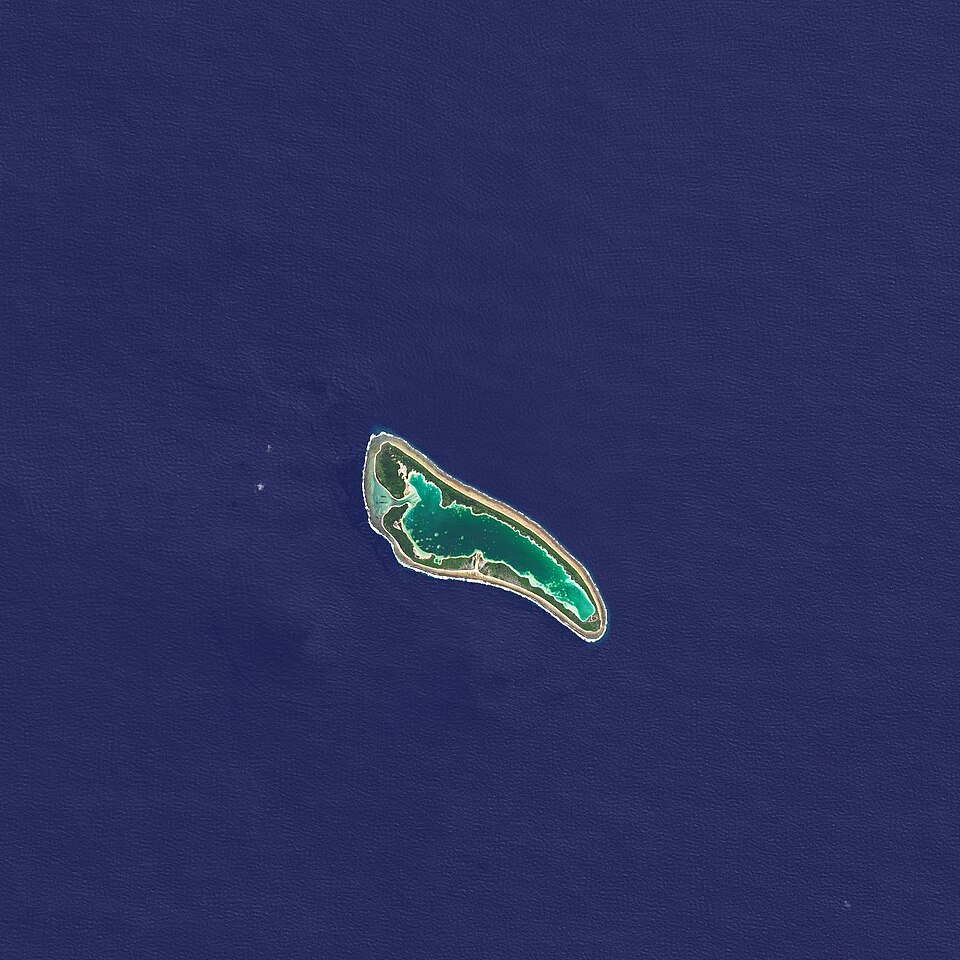
The evidence for this theory:
- Radio calls. In the days after the disappearance, many radio operators reported weak distress calls on Earhart’s frequencies. Some could only have come from a plane sitting on land, using an engine to charge its batteries.
- The bones. In 1940 a British colonial officer on Nikumaroro found part of a human skeleton, along with what seemed to be part of a woman’s shoe and a sextant box. A doctor in Fiji measured the bones in 1941 and decided they were from a man. The bones were later lost. In 2018 the anthropologist Richard Jantz re-analysed the 1941 measurements with modern methods and argued they were much more like Earhart than most people.
- Artefacts. TIGHAR’s expeditions have found items such as a piece of aircraft aluminium, an American cosmetics jar of the 1930s and signs of campfires.
The case against it is that none of these finds has been firmly linked to Earhart, the bones cannot be tested, and many expeditions have not found the plane on the reef or in deeper water nearby.
Theory 3: captured by the Japanese
This theory says Earhart and Noonan came down in the Marshall Islands, then controlled by Japan, and died in custody on Saipan. It relies on witness accounts gathered decades later. In 2017 a television documentary claimed a photo from the National Archives showed them on a dock in the Marshall Islands. Within days a blogger found the same photo in a Japanese book published in 1935, two years before the flight. There is no reliable evidence for this theory.
Our take
The most likely answer is still the plainest one: Earhart and Noonan couldn’t find a tiny island, ran out of fuel and ended up in the sea. The Nikumaroro theory is the best of the alternatives, with real if indirect evidence, and can’t be ruled out. Either way, the end came from the limits of 1930s navigation and radio, not from anything mysterious. It shouldn’t overshadow her life, which did more than almost anyone’s to show that flying was not only for men.
More to explore
Read our round-up of strange disappearances that remain unsolved, or another modern aviation mystery, Malaysia Airlines Flight MH370.
Sources and further reading
- Butler, S. (1997). East to the Dawn: The Life of Amelia Earhart. Addison-Wesley.
- Long, E. M. & Long, M. K. (1999). Amelia Earhart: The Mystery Solved. Simon & Schuster.
- Gillespie, R. (2006). Finding Amelia: The True Story of the Earhart Disappearance. Naval Institute Press.
- Jantz, R. L. (2018). “Amelia Earhart and the Nikumaroro Bones.” Forensic Anthropology.