

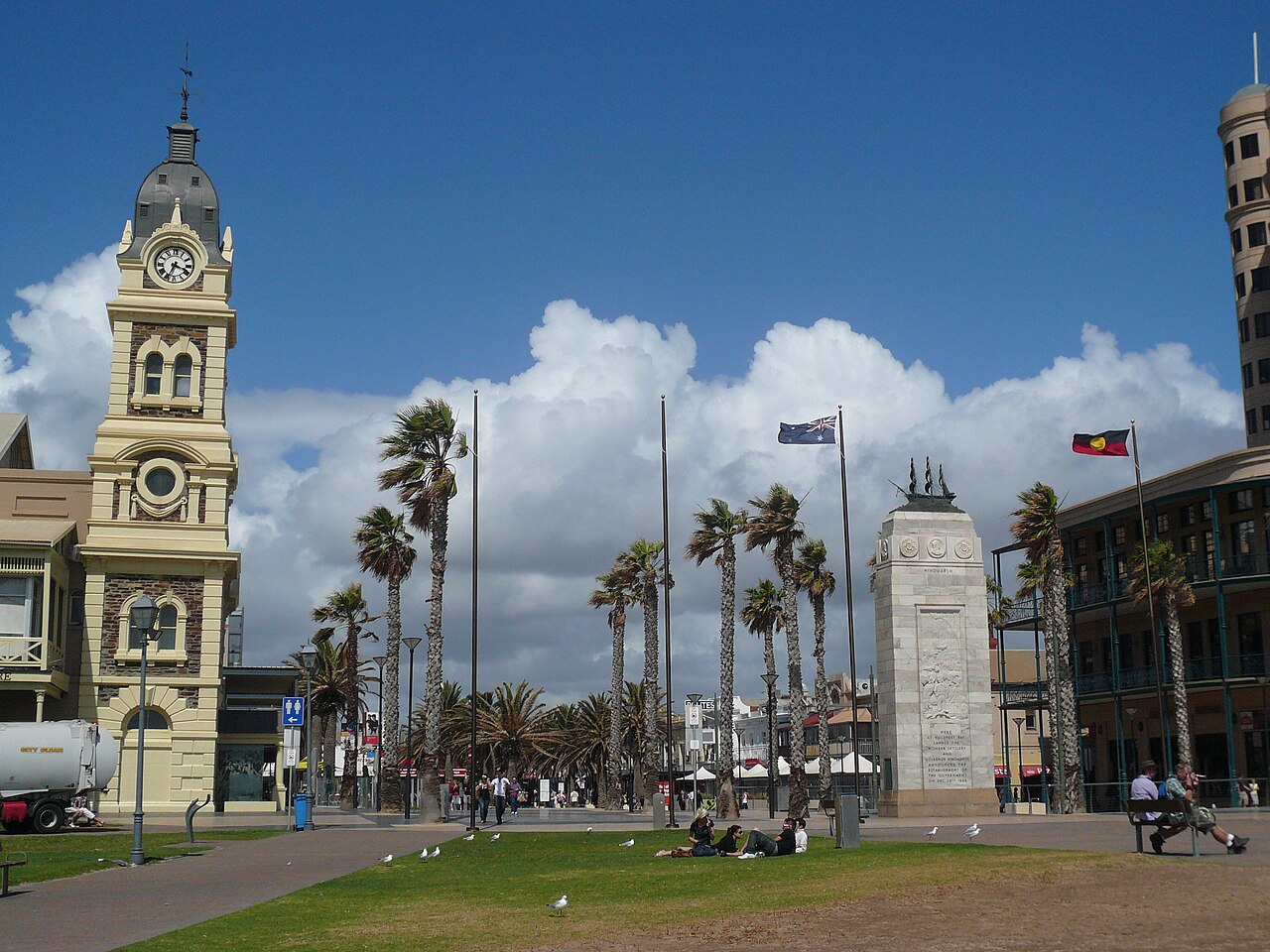
Early on 1 December 1948, a man was found dead on Somerton Park beach in Adelaide, South Australia, propped against the sea wall. He was neatly dressed in a suit and tie, but carried no wallet or identification, and the labels had been removed from his clothes. Nobody knew who he was or how he had died.
The case became stranger as clues emerged: a hidden scrap of paper with the words “Tamam Shud”, a book of Persian poetry, and a short code that has never been decoded. For more than 70 years he was known only as “the Somerton Man”. Here’s what is known, and what recent research has revealed.
Key facts
- Found: 1 December 1948, Somerton Park beach, Adelaide, Australia.
- Cause of death: never established. Poisoning was suspected, but no poison was found.
- Key clue: a scrap reading “Tamam Shud”, torn from a copy of the Rubaiyat of Omar Khayyam.
- The code: five lines of capital letters written in the back of that book. Unsolved.
- Identified: in 2022, researchers named him as Carl “Charles” Webb, an electrical engineer from Melbourne, using DNA and family-tree research.
A man with no name
Witnesses had seen a man lying in the same spot the evening before, but thought he was asleep or drunk. A post-mortem found that his organs showed signs consistent with poisoning, but tests found no poison. The pathologist suspected a rare poison that broke down quickly in the body, but this was never proven.
Police circulated his photograph and fingerprints across Australia and abroad. Nobody came forward to identify him. His body was embalmed and kept for months while the investigation continued.
The suitcase
In January 1949, staff at Adelaide railway station found a brown suitcase that had been checked in on 30 November 1948, the day before the body was found. It was linked to the dead man by a type of thread that matched a repair on his trousers. Labels had been removed from most of the clothes inside, but a few items had the names “Kean” or “Keane” on them, which led nowhere. The case also contained tools of a kind used for stencilling.
“Tamam Shud”
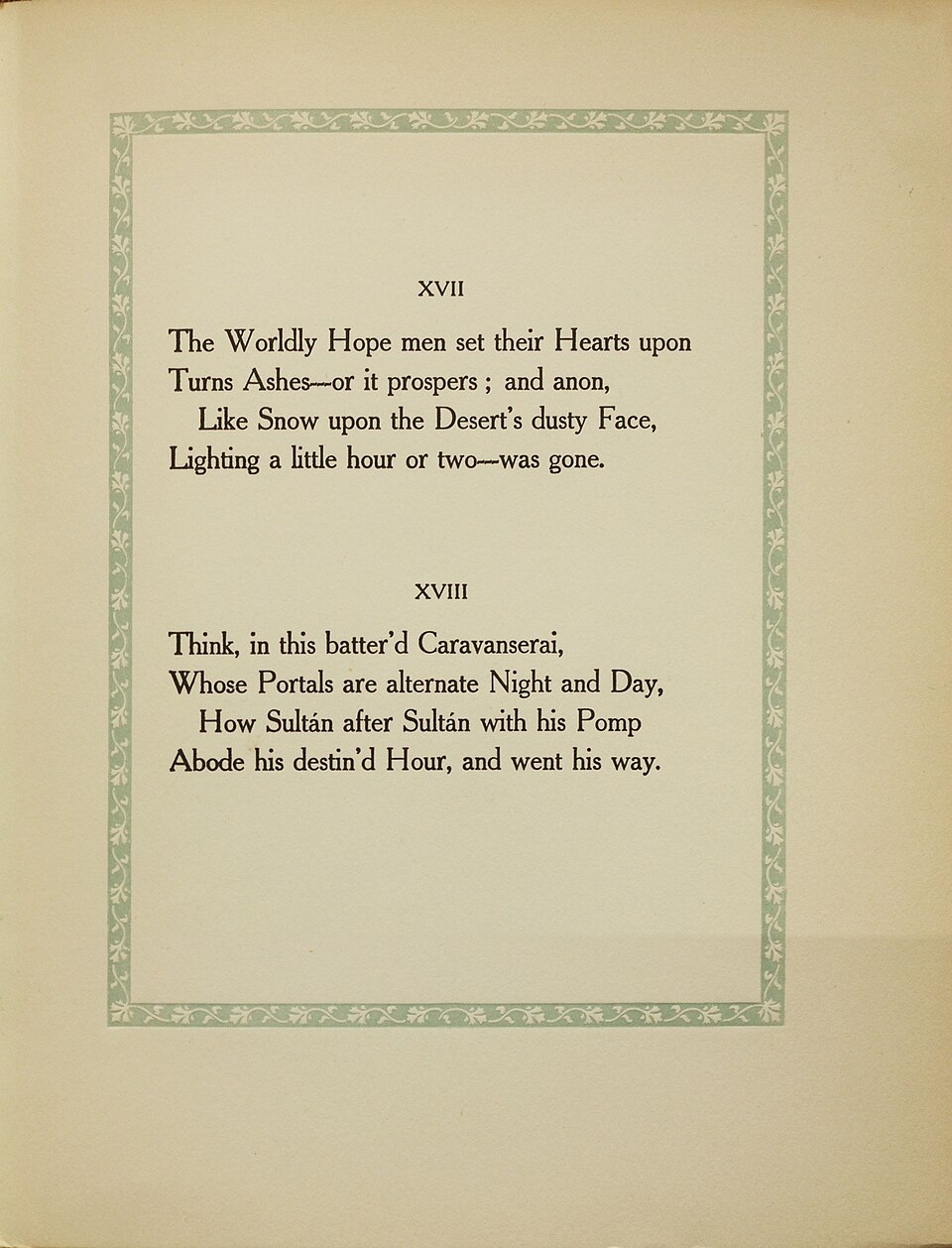
A closer search of the man’s clothes found a tiny rolled-up piece of paper in a hidden pocket in his trousers. Printed on it were the words “Tamám Shud”, a Persian phrase meaning “ended” or “finished”. Library staff recognised it as the final words of the Rubaiyat of Omar Khayyam, a collection of poems about life, death and enjoying the moment, in the popular English translation by Edward FitzGerald.
Police appealed for the book the scrap had been torn from. A man came forward with a copy of the Rubaiyat that he said he had found in his car, parked near the beach around the time of the death. The final words had been torn out.
The code
In the back of the book, written faintly in pencil, were five short lines of capital letters. The second line was crossed out, and looks very similar to the fourth. There was also a local telephone number.
Navy codebreakers and many amateurs have studied the letters. The most common view is that they’re the first letters of words, perhaps of a poem or a personal note, which would make them almost impossible to decode without knowing the original text. Statistical studies, including work by students at the University of Adelaide, found the letter patterns match the first letters of English words better than random letters or a typical cipher. No convincing solution has been found.
The phone number
The phone number belonged to a young nurse who lived near the beach. When police showed her a plaster cast of the dead man, she was reported to be visibly shaken, but said she didn’t know him. She had once owned a copy of the Rubaiyat, which she said she had given to an army officer during the war. When police traced him, he was alive and still had his copy, complete. She never gave a fuller account before her death in 2007. We have chosen not to name her here, as she was never accused of any wrongdoing.
Theories
- A spy: the case happened during the early Cold War, when Adelaide was close to the Woomera rocket range. The code and the missing labels led to stories of espionage. There’s no evidence he was a spy.
- Suicide: the “Tamam Shud” scrap, meaning “it is finished”, and the poems’ themes of death led some to suspect he took his own life.
- A personal connection: many believe the man had a private link to someone in Adelaide, and that the answer lies in his personal life rather than espionage.
A name at last?
The man was buried in Adelaide’s West Terrace Cemetery in 1949. In 2021, his body was exhumed so that DNA could be tested. Meanwhile, Professor Derek Abbott of the University of Adelaide had been working with the American forensic genealogist Colleen Fitzpatrick, using DNA from hairs caught in the plaster cast of his head.
In July 2022, they announced that they had identified him as Carl “Charles” Webb, an electrical engineer born in Melbourne in 1905. Family-tree research linked him to living relatives. Webb had separated from his wife and had a known interest in poetry. The identification was widely reported, though police said at the time that their own forensic work was continuing.
Even if Webb is the Somerton Man, many questions remain: why he came to Adelaide, how he died, and what the code means.
Our take
The Tamam Shud case has had a lot of spy-thriller theories attached to it, but the most likely explanation is more ordinary and sadder: a man who travelled to Adelaide for personal reasons and died alone, possibly by his own hand. The 2022 identification is a breakthrough, and shows how DNA genealogy can solve very old cases. The code may never be read.
More to explore
Read our guide to famous unsolved codes and ciphers, or about another strange case with two unidentified men, the Lead Masks case.
Sources and further reading
- Abbott, D. et al. University of Adelaide: research on the Somerton Man and the Tamam Shud code.
- Greenwood, K. (2012). Tamam Shud: The Somerton Man Mystery.
- Coroner’s inquest, South Australia (1949).
- ABC News (Australia): reports on the 2021 exhumation and the 2022 identification.