

You sit down with a psychic you’ve never met. Within minutes they mention an older man who has passed away, a problem with your chest or heart, and a name beginning with J. It feels uncanny. Most of the time, the explanation is cold reading: a set of techniques that let anyone appear to know things about a stranger without any special powers. This guide explains how cold reading works, why it convinces so many people, and how to recognise it.
What is cold reading?
Cold reading means giving someone a “reading” without any prior information about them, using general statements, educated guesses, observation and the person’s own reactions. The reader starts vague, watches how the person responds, and then narrows down. Most of the information actually comes from the person being read, who usually doesn’t notice they’re supplying it.
The term covers two related methods as well:
- Warm reading uses statements that apply to almost everyone in a particular situation, such as someone visiting a medium after a loss.
- Hot reading uses information gathered in advance, such as from social media, overheard conversations or forms filled in before a show. That’s deliberate fraud rather than a psychological technique.
The main cold reading techniques
1. Barnum statements
Barnum statements sound personal but apply to nearly everyone: “You have a lot of unused potential,” or “You can be outgoing, but sometimes you need time on your own.” They’re named after the showman P. T. Barnum, who was said to have “something for everyone”.
Their power was shown by psychologist Bertram Forer. He gave his students what he said was a personal profile based on a test they’d taken. In fact, every student got the same text, mostly taken from horoscopes. Asked to rate how well it described them, from 0 to 5, they gave an average score of 4.26. This tendency to accept vague descriptions as personal is now called the Forer effect or Barnum effect, and the experiment has been repeated many times with similar results.
2. The rainbow ruse
A rainbow ruse covers both possibilities at once: “You’re generally a trusting person, but you’ve been let down in the past and can be guarded.” Whichever half fits, the listener remembers it as a hit. The name comes from Ian Rowland’s well-known handbook on cold reading.
3. Shotgunning
The reader fires off lots of details quickly, especially to a group: “I’m getting a J… James, John, maybe Jennifer… someone connected to water… a uniform.” Someone in the audience will usually connect with something. The misses are forgotten and the hits are built on.
4. High-probability guesses
Some guesses are much safer than they seem. Most adults have lost an older relative. Heart disease and cancer are the most common causes of death in many countries, so “a problem in the chest area” is a good bet. Many people have a box of old photos, a piece of jewellery from a relative, or a scar from childhood. Said with confidence, these feel specific.
5. Questions disguised as statements
“I feel there’s been some kind of change at work recently?” The rising tone makes it a question, but if the answer is yes, it sounds like the reader knew. If the answer is no, they can move on: “There will be, then. Keep an eye on it.”
6. Reading the person
Age, clothes, accent, a wedding ring, a tan line where a ring used to be, nervousness, or the reason someone gives for coming all carry clues. Skilled readers also watch for tiny reactions, such as a nod, a change in breathing or a look away, and follow whichever path gets the strongest response.
7. Turning misses into hits
When a guess is wrong, a reader rarely admits it. Instead: “Perhaps that’s someone further back in the family,” “That might not make sense now, but it will,” or “You may not have been told about it.” The person often goes home and finds something that fits, which makes the reading seem even more impressive.
Why cold reading works on intelligent people
Cold reading doesn’t rely on people being foolish. It relies on normal features of how memory and belief work:
- Subjective validation: we’re good at finding personal meaning in general statements, especially when we’ve been told they’re about us.
- Selective memory: we remember the striking hits and forget the many misses. Studies of recorded readings regularly find that people remember them as much more accurate than they were.
- We do the work: the listener fills gaps with their own knowledge. “A J name” becomes “my grandfather John” in the listener’s mind, and later they remember the reader saying “John”.
- Emotion and hope: someone grieving or worried wants the reading to be true, which makes them more cooperative and less critical.
Do psychics know they’re doing it?
Not always. Psychologist Ray Hyman, who wrote a famous 1977 article on cold reading, read palms as a young man and came to believe it really worked. A mentalist friend, Stanley Jaks, suggested he try deliberately giving readings that were the opposite of what the lines on the palm supposedly meant. His clients were just as satisfied. Hyman realised the readings worked because of how they were delivered, not because of palmistry.
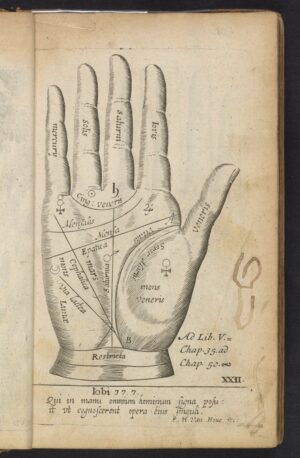
Many readers develop these skills gradually through practice and feedback, and sincerely believe their impressions come from intuition or a spiritual source. Others know exactly what they’re doing. From the outside, the techniques look the same.
A famous case of hot reading
The clearest exposures involve hot reading. In 1986, investigator James Randi and his team, with electronics expert Alexander Jason, used a radio scanner at the shows of the American faith healer Peter Popoff. Popoff seemed to know the names, addresses and illnesses of people in the audience. The scanner picked up his wife, Elizabeth, reading him that information from prayer cards that audience members had filled in, through an earpiece he was wearing. Randi played the recording on The Tonight Show Starring Johnny Carson.

What happens when mediums are tested?
Researchers can control for cold reading by stopping the reader from seeing or hearing the person and asking people to pick out their own reading from several. In a 2005 study published in the British Journal of Psychology, Ciarán O’Keeffe and Richard Wiseman tested five professional mediums this way. Each gave readings for five people they never met. The people being read rated statements from all the readings without knowing which were meant for them. The results showed no evidence of genuine mediumship. For a wider look at the research, see our article on what 175 years of testing has shown about psychics.
How to spot cold reading
- Count the questions. A reader who asks a lot, or makes statements with a rising tone, is gathering information.
- Notice the vagueness. “An older man”, “a J name”, “something to do with paperwork” could fit almost anyone.
- Stay neutral. Try not to nod, confirm or add details. Readings tend to fall apart without feedback.
- Record it. Listening back usually reveals more misses and more information supplied by you than you remembered.
- Ask for something checkable. A specific, unknown fact that can be verified later is the real test.
Our take
Cold reading is a fascinating window into how our minds work. It shows how readily we find meaning in vague words, how much we reveal without realising, and how memory improves a story after the fact. Many people find readings comforting, and that comfort is real. But the evidence points to psychology, not psychic powers, as the explanation, and it’s worth knowing the techniques if you’re thinking of paying for a reading, especially at a vulnerable time.
More to explore
For more on why convincing beliefs can be wrong, read why people believe conspiracy theories. And for predictions made with confidence, see prophecies that came true, and the many that didn’t.
Sources and further reading
- Forer, B. R. (1949). “The fallacy of personal validation: a classroom demonstration of gullibility.” Journal of Abnormal and Social Psychology, 44(1).
- Hyman, R. (1977). “Cold reading: how to convince strangers that you know all about them.” The Zetetic (now Skeptical Inquirer), 1(2). Summary at The Skeptic’s Dictionary.
- Rowland, I. (2002). The Full Facts Book of Cold Reading. Ian Rowland Limited.
- O’Keeffe, C. and Wiseman, R. (2005). “Testing alleged mediumship: methods and results.” British Journal of Psychology, 96(2).
- Randi, J. (1987). The Faith Healers. Prometheus Books.
- Time: James Randi: Fighting Against Flimflam.