
Scientists still don’t agree on why we dream. Over the past 125 years, researchers have proposed a dozen serious theories. Some say dreams have a purpose, such as rehearsing for danger or sorting memories. Others say dreams are a side effect of the sleeping brain with no purpose of their own. This guide explains the main dream theories in plain language and what the evidence says about each.
The short answer
No single theory explains all dreams. The strongest evidence today supports the idea that dreaming is linked to how the sleeping brain processes memories and emotions, and that dream content reflects our waking concerns. Whether dreams themselves do anything useful, or are just a by-product of that processing, is still debated. For a broader introduction, start with our guide to why we dream.
The main dream theories at a glance
- Wish fulfilment (Freud, 1899): dreams disguise hidden wishes.
- Compensation (Jung): dreams balance one-sided attitudes in waking life.
- Activation-synthesis (Hobson and McCarley, 1977): the brain makes a story out of random signals during REM sleep.
- Reverse learning (Crick and Mitchison, 1983): we dream in order to forget useless connections.
- Continuity hypothesis (Hall, Domhoff, Schredl): dreams reflect our everyday concerns.
- Threat simulation (Revonsuo, 2000): dreams rehearse responses to danger.
- Memory consolidation (Stickgold, Wamsley and others): dreams reflect the brain strengthening new memories.
- Emotional regulation (Walker and others): REM sleep takes the sting out of painful experiences.
- Overfitted brain (Hoel, 2021): strange dreams stop the brain from learning too narrowly.
Freud: dreams as hidden wishes
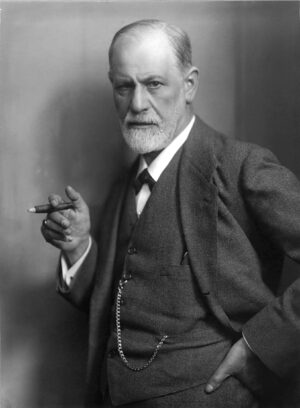
Sigmund Freud’s The Interpretation of Dreams was published in November 1899, though it was dated 1900. Freud called dreams “the royal road” to the unconscious mind. He argued that every dream fulfils a wish, usually one we would find unacceptable when awake. To protect sleep, the mind disguises the wish, so the story we remember (the “manifest content”) hides its true meaning (the “latent content”). Interpreting a dream meant decoding the symbols.
What the evidence says: Freud was right that dreams are meaningful to the dreamer and connected to emotions and personal concerns. But there is little evidence that dreams are mainly about disguised wishes, and his method of interpretation can’t be tested scientifically: any dream can be made to fit. Most dream researchers today don’t use his framework, although it remains influential in psychotherapy.
Jung: dreams as balance
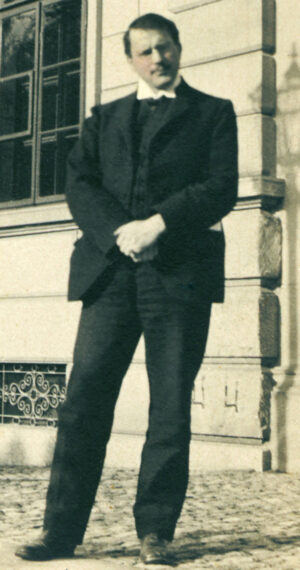
Carl Jung, once Freud’s close colleague, disagreed that dreams hide anything. He saw them as the mind’s natural way of communicating, often to balance (or “compensate” for) attitudes we hold too strongly when awake. He also believed some dream images come from a “collective unconscious” shared by all humans, which he called archetypes.
What the evidence says: like Freud’s ideas, Jung’s are hard to test. They’re more useful as a way of reflecting on dreams than as a scientific explanation.
Activation-synthesis: the brain making sense of noise
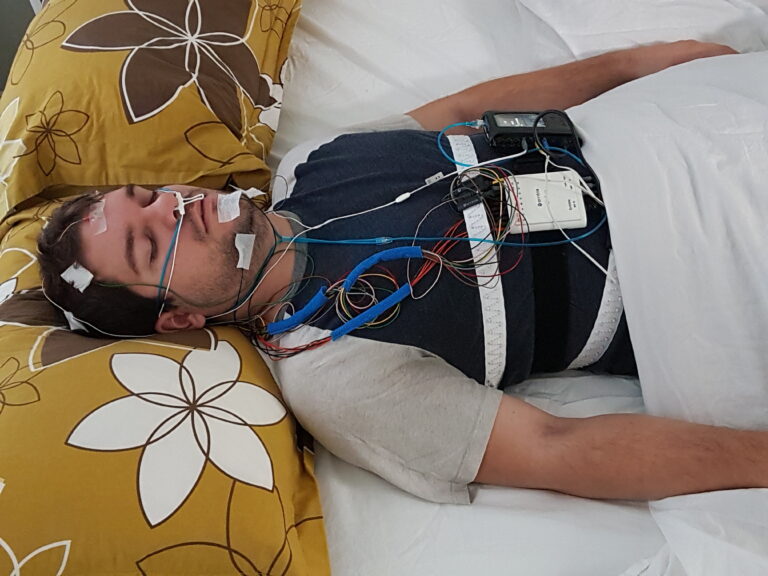
In 1977, Harvard psychiatrists J. Allan Hobson and Robert McCarley offered a very different idea. During REM (rapid eye movement) sleep, when most vivid dreaming happens, the brainstem sends bursts of activity up to the rest of the brain. Hobson and McCarley argued that the forebrain tries to make sense of these signals and “synthesises” them into a story. The strangeness of dreams, in this view, comes from the randomness of the input, not from hidden meaning.
What the evidence says: the theory was hugely influential because it was based on brain biology rather than interpretation. But it has problems. People also dream outside REM sleep, and neuropsychologist Mark Solms found that patients with damage to parts of the forebrain stopped dreaming, while damage to the brainstem areas that drive REM sleep didn’t always stop dreams. Hobson later updated his ideas into the “protoconsciousness” theory, which sees REM sleep as a kind of virtual-reality training ground for the waking mind.
Reverse learning: dreaming to forget
In 1983, Francis Crick (co-discoverer of the structure of DNA) and Graeme Mitchison suggested in Nature that REM sleep clears out unwanted connections in the brain’s networks. “We dream in order to forget,” they wrote, which would explain why we forget most dreams.
What the evidence says: the specific mechanism they proposed hasn’t been confirmed. But the broader idea that sleep prunes and rebalances brain connections has some support, for example in the “synaptic homeostasis” theory of sleep.
The continuity hypothesis: dreams reflect daily life
Since the 1950s, researchers such as Calvin Hall, and later G. William Domhoff and Michael Schredl, have collected and coded thousands of dream reports. They found that dreams are less random than they feel. The people, places, worries and activities that matter to us when awake tend to show up in our dreams, often in exaggerated form. Someone worried about work dreams about work; someone grieving dreams about the person they’ve lost.
What the evidence says: this is one of the best-supported findings in dream research. It describes what dreams contain rather than why we have them, but it argues against the idea that dreams are meaningless noise. Domhoff’s “neurocognitive” theory builds on it, proposing that dreams are produced by the same brain networks that we use for daydreaming and imagining.
Threat simulation: rehearsing for danger
In 2000, Finnish psychologist Antti Revonsuo proposed that dreaming evolved to simulate threats. Our ancestors faced constant danger, so a brain that rehearsed escaping predators or enemies during sleep might have had a survival advantage. This would explain why so many dreams involve being chased, attacked, falling or failing.
What the evidence says: studies do show that threatening events are common in dreams, more common than in waking life. A 2005 study of children in Kurdistan who had experienced trauma found they had more, and more severe, threat dreams than children in safe environments in Finland. Critics point out that many dreams aren’t threatening at all, and that it’s hard to show rehearsal in dreams actually helps people survive. Revonsuo and colleagues later suggested a related “social simulation” theory, in which dreams rehearse social relationships.
Memory consolidation: dreams and learning
We know that sleep helps memory: people usually remember new information better after sleeping. Some researchers think dreams are a window into that process. In a 2010 study published in Current Biology, Erin Wamsley, Robert Stickgold and colleagues trained 99 volunteers on a computer maze. Some then took a nap. Those who napped and dreamed about the maze improved far more when retested than those who didn’t, while thinking about the maze while awake didn’t help.
What the evidence says: the link between sleep and memory is strong. Whether the dream itself does the work, or is just a sign that the brain is processing the memory, is less clear. The authors of the maze study suggested the dreams were more likely a sign of the processing than the cause of it. Dreams rarely replay events exactly; they tend to mix new memories with older ones, which may reflect how the brain links new information to what it already knows.
Emotional regulation: overnight therapy
Another group of theories focuses on emotions. During REM sleep, levels of noradrenaline, a stress-related chemical in the brain, drop very low, while emotional areas such as the amygdala are highly active. In a 2009 paper titled “Overnight therapy?”, neuroscientists Matthew Walker and Els van der Helm proposed that REM sleep lets the brain reprocess emotional memories in this calm chemical state, keeping the information while softening the emotional charge.
What the evidence says: several studies support a link between REM sleep and emotional processing, and disrupted REM sleep is common in conditions such as post-traumatic stress disorder (PTSD), where repeated nightmares suggest the process has broken down. But the results are mixed, and some studies find sleep can strengthen rather than soften emotional memories.
The overfitted brain: why dreams are weird
One of the newest ideas comes from neuroscientist Erik Hoel, who borrowed a concept from artificial intelligence. When an AI system learns from the same data too narrowly, it “overfits” and copes badly with anything new. Programmers fix this by adding noise and variation to the training. In a 2021 paper in the journal Patterns, Hoel proposed that dreams do the same for the brain: their strange, distorted scenes stop us from learning too narrowly from our repetitive daily experiences.
What the evidence says: it’s an interesting idea that explains why dreams are bizarre rather than realistic, but it’s new and hasn’t been directly tested yet.
What scientists think today
Most researchers now see these theories as overlapping rather than competing. A reasonable summary of current thinking is:
- Dreams are made by the same brain networks we use when imagining and remembering. A 2017 study in Nature Neuroscience found a “hot zone” at the back of the brain whose activity predicted whether people were dreaming, in both REM and non-REM sleep.
- Dream content is shaped by our memories, emotions and concerns, which is why dreams feel personal.
- Sleep clearly helps memory and emotional balance. Dreams may be part of that work or a by-product of it.
- Dreams are strange because the parts of the brain involved in logic and self-reflection are less active during REM sleep, so we accept bizarre events without question.
Our take
The question “why do we dream?” may not have one answer, because “dreaming” covers many experiences, from vague thoughts in light sleep to vivid stories in REM sleep. What’s clear is that dreams aren’t random nonsense, and they aren’t secret messages either. They’re the sleeping brain doing what it does when awake: remembering, imagining, worrying and making connections, just without the usual checks. Paying attention to your dreams can tell you what’s on your mind; it won’t predict the future (for more on that, see our look at prophecies that came true, and the many that didn’t).
More to explore
Dreams are one of several mysteries the brain still hasn’t revealed. Read about seven big questions science still can’t answer about the human brain, or find out what 175 years of testing has shown about psychics.
Sources and further reading
- Freud, S. (1899/1900). The Interpretation of Dreams.
- Hobson, J. A. and McCarley, R. W. (1977). “The brain as a dream state generator: an activation-synthesis hypothesis of the dream process.” American Journal of Psychiatry, 134(12).
- Crick, F. and Mitchison, G. (1983). “The function of dream sleep.” Nature, 304.
- Solms, M. (2000). “Dreaming and REM sleep are controlled by different brain mechanisms.” Behavioral and Brain Sciences, 23(6).
- Revonsuo, A. (2000). “The reinterpretation of dreams: an evolutionary hypothesis of the function of dreaming.” Behavioral and Brain Sciences, 23(6).
- Valli, K. et al. (2005). “The threat simulation theory of dreaming: evidence from traumatized children.” Consciousness and Cognition, 14(1).
- Domhoff, G. W. (2003). The Scientific Study of Dreams. American Psychological Association.
- Hobson, J. A. (2009). “REM sleep and dreaming: towards a theory of protoconsciousness.” Nature Reviews Neuroscience, 10.
- Walker, M. P. and van der Helm, E. (2009). “Overnight therapy? The role of sleep in emotional brain processing.” Psychological Bulletin, 135(5).
- Wamsley, E. J. et al. (2010). “Dreaming of a learning task is associated with enhanced sleep-dependent memory consolidation.” Current Biology, 20(9).
- Siclari, F. et al. (2017). “The neural correlates of dreaming.” Nature Neuroscience, 20.
- Hoel, E. (2021). “The overfitted brain: dreams evolved to assist generalization.” Patterns, 2(5).